
How to Learn Guitar Notes & Read the Fretboard in 10 Days
One of the biggest challenges I see as a session guitarist isn’t speed or fancy licks — it’s not knowing the fretboard. When you don’t know where the notes are, improvisation, chord inversions, and soloing feel like guesswork. You freeze, plateau, and get frustrated.
The good news? You can learn the fretboard in just 10 days if you follow a focused, real-world approach — the same method I teach in my Fretboard Freedom program.
This method works for beginners, intermediate players, and anyone ready to start playing the guitar with confidence anywhere on the neck.
Why Most Guitarists Struggle With the Fretboard
Most players try to memorize the fretboard note by note, fret by fret. It doesn’t stick. The trick is pattern-based learning, so you can navigate the neck with logic instead of guessing.
When you see patterns — octaves, intervals, and scale relationships — your fingers move automatically, and your improvisation becomes musical instead of robotic.
The 10-Day Fretboard Freedom Method
Here’s how I teach it:
Step 1: Master the Low E and A Strings
Start by learning all the notes on the low E and A strings. These strings act as your anchors across the neck.
Goal: Know every note on these two strings without hesitation.
Step 2: Use Octave Shapes to Unlock the Neck
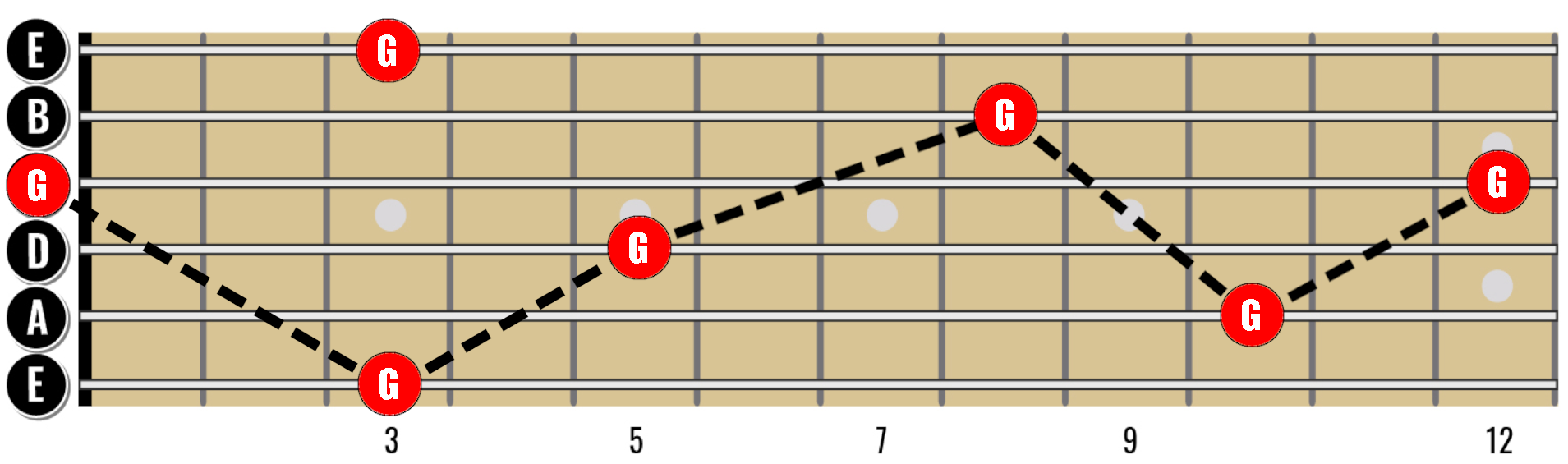
Once you know the low E and A string notes, you can map the rest of the fretboard using octave shapes.
-
Learn how the same note repeats across the neck
-
See patterns for both chords and scales
-
Practice moving from string to string confidently
Result: You now have the entire fretboard “unlocked” logically, not memorised randomly.
Step 3: Learn Notes and Intervals Within Your Scales
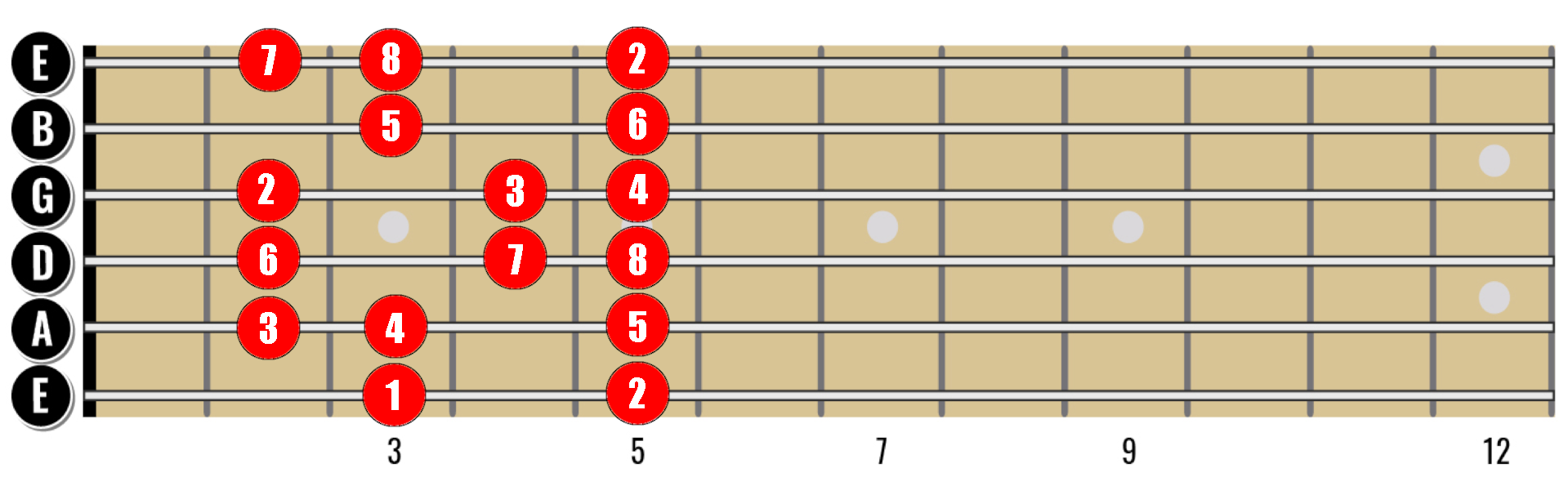
Next, focus on your scales: major, minor, and pentatonic.
-
Identify chord tones within the scale
-
Recognize color notes to target when improvising
-
Practice moving through scales while naming intervals
Why: This makes improvisation much easier and musical — you’re not just running scales, you’re playing with intention. Read more on guitar intervals here.
Step 4: Expand into the CAGED System
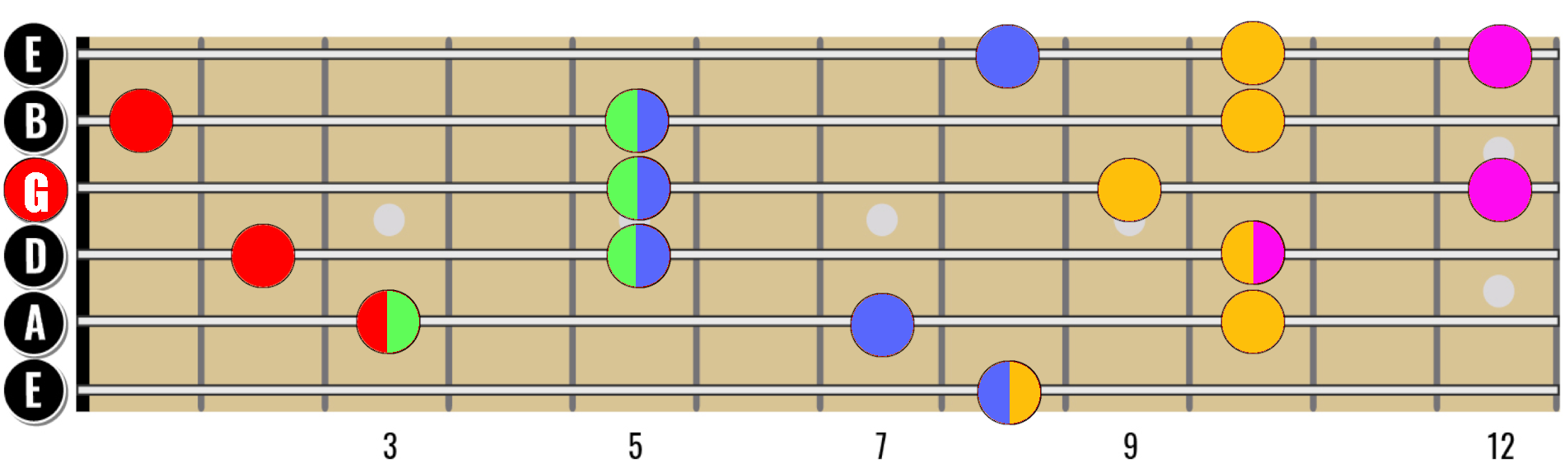
Once you can see notes and intervals:
-
Learn CAGED shapes for major chords
-
Understand inversions and triads across the neck
-
Connect these chord shapes with your scale knowledge
Result: You can play any chord, inversion, or triad anywhere and improvise over it seamlessly.
Pro Tips From Real-World Experience
-
Say note names out loud as you play — it reinforces memory.
-
Practice connecting chord tones within scales — this is the bridge to improvisation.
-
Use backing tracks — apply what you’ve learned in musical context.
With short, focused practice sessions over 10 days, your fretboard navigation becomes second nature.
What Happens When You Master This Approach
-
You’ll know every note on the neck without thinking
-
Improvisation becomes intuitive, because you can target chord tones and color notes
-
Triads, inversions, and CAGED shapes feel natural
-
Your playing suddenly starts sounding “connected” and musical
This is the exact method I use in the studio and on stage. It’s how professional guitarists navigate the fretboard effortlessly.
Next Step
If you want daily guidance, exercises, and diagrams to follow this method exactly, check out the Fretboard Freedom mini course. It’s the fastest way to get confident across the neck and start improvising like a pro.

