
How to Memorise Guitar Notes on the Fretboard Fast
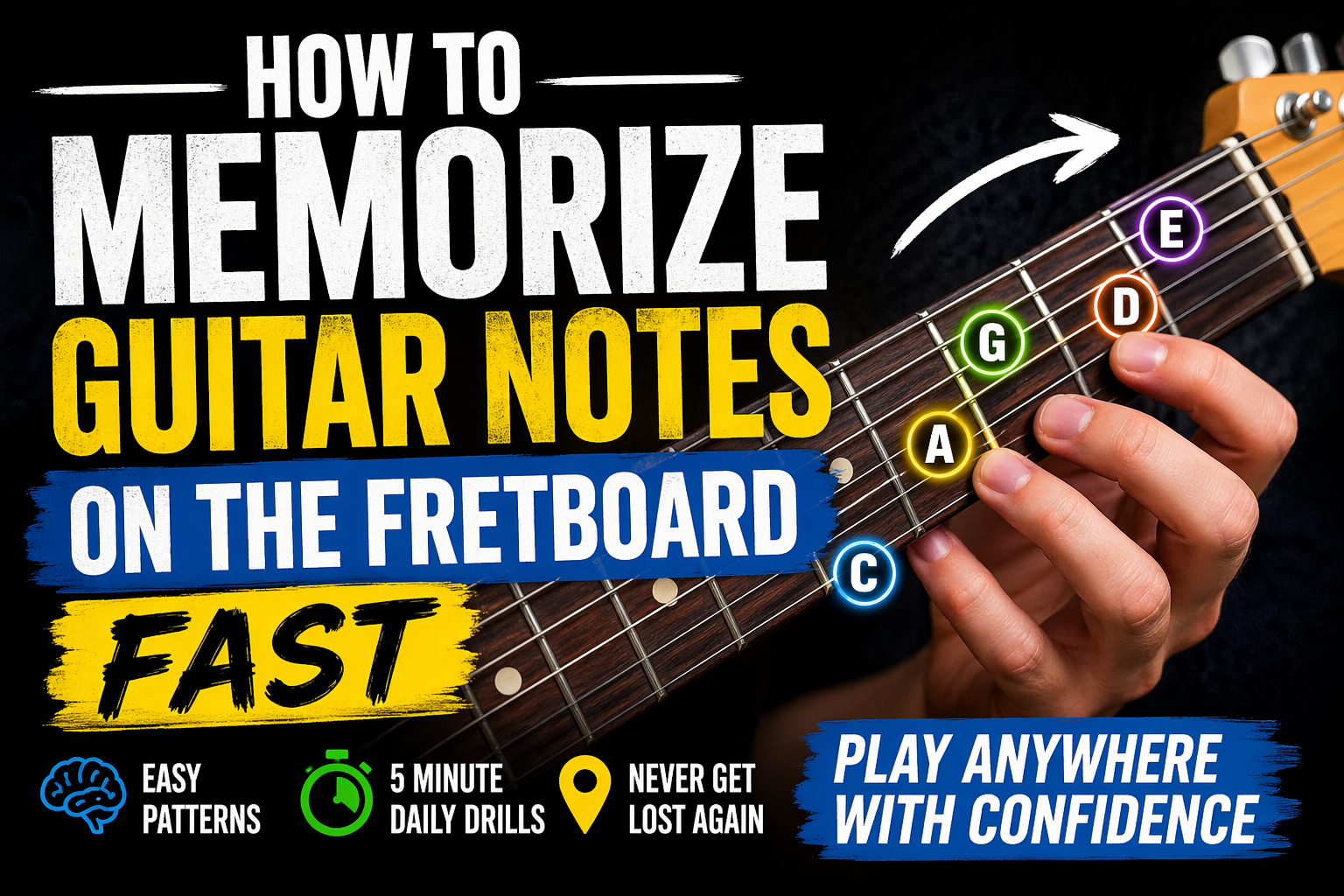
If you’ve ever tried learning every note on the guitar fretboard and felt overwhelmed, you’re not alone!
Most guitar players approach fretboard memorisation completely backwards. They stare at endless diagrams, memorise random notes, or try learning all six strings at once...
And then forget everything days later...
The truth?
Learning guitar fretboard notes becomes much easier when you understand patterns instead of trying to brute-force memorisation.
In this guide, I’ll show you how to memorise notes faster and permanently retain them so you can move around the neck with confidence.
If you're completely new to fretboard learning, start with my full Ultimate Guide to Learning the Guitar Fretboard here: https://www.playlikeaproguitar.com/blog/UltimateGuidetoLearningGuitarFretboard
Why Most Guitar Players Struggle To Learn The Fretboard
The biggest mistake guitar players make is trying to memorise every note at once. This creates overwhelm. It's just too much! Instead, focus on learning:
- Note patterns
- Octave shapes
- Root notes
- String landmarks
This allows you to learn faster while actually understanding the neck.
For more advanced fretboard movement strategies, check out: https://www.playlikeaproguitar.com/blog/UnlockTheFretboard
Learn The Low E String First
Start by memorising notes on the low E string:
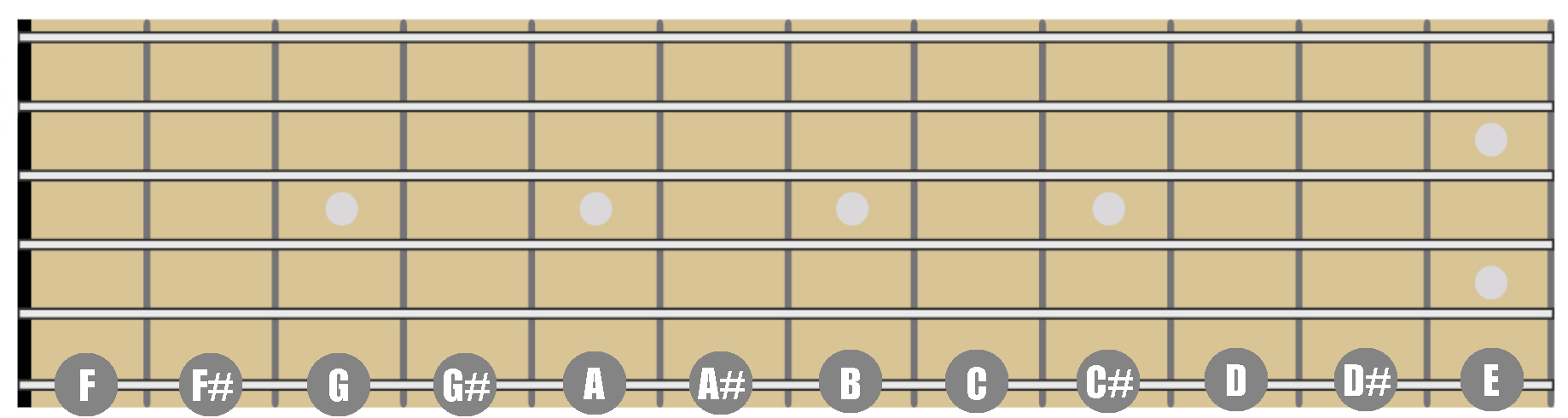
These notes repeat naturally across the neck and are a great starting point for mapping the fretboard. This all helps with:
- Barre chords
- Finding root notes
- Scale navigation
Top Tip: Use the fretboard markers as sign posts. Learn the notes at fret 1,3,5,7,9 and 12 first, then fill in the blanks!
Learn The A String Next
The A string also helps us unlock:
- Power chords
- Movable chord shapes
- CAGED positions
Once you know the E and A strings, your navigation improves dramatically.
Use Octave Shapes
This is where memorisation becomes much easier.
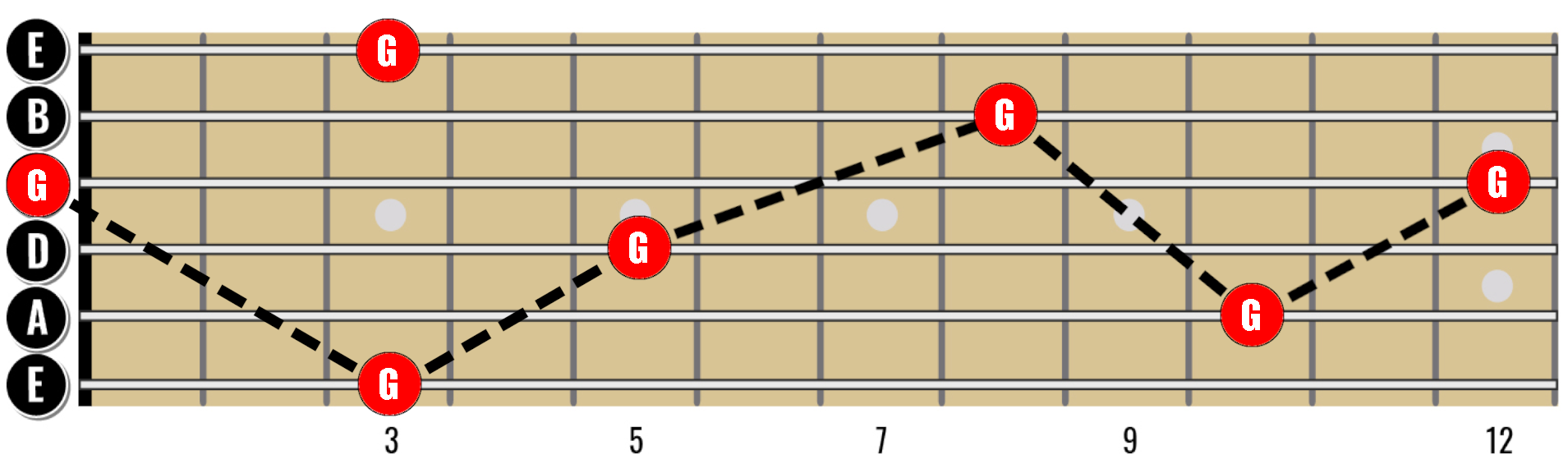
Example:
3rd fret low E = G. That same G can be found using octave patterns across other strings.
This dramatically reduces how much memorisation is required. Once you're able to see the octave patterns across the neck, finding notes becomes a breeze.
Practice Random Note Drills
Spend 5 minutes per day asking yourself:
“What note is on the 9th fret of the G string?”
“What note is on the 3rd fret of the A string?”
"Where are all the E notes on the guitar?"
This helps build instant recognition and trains your brain to use the octave shapes to locate notes across the fretboard.
Use Notes Inside Scale Shapes
One major reason players get stuck in pentatonic boxes is because they only memorise scale shapes... not actual notes. Once you understand the notes inside your scales, improvisation and fretboard navigation becomes easier.
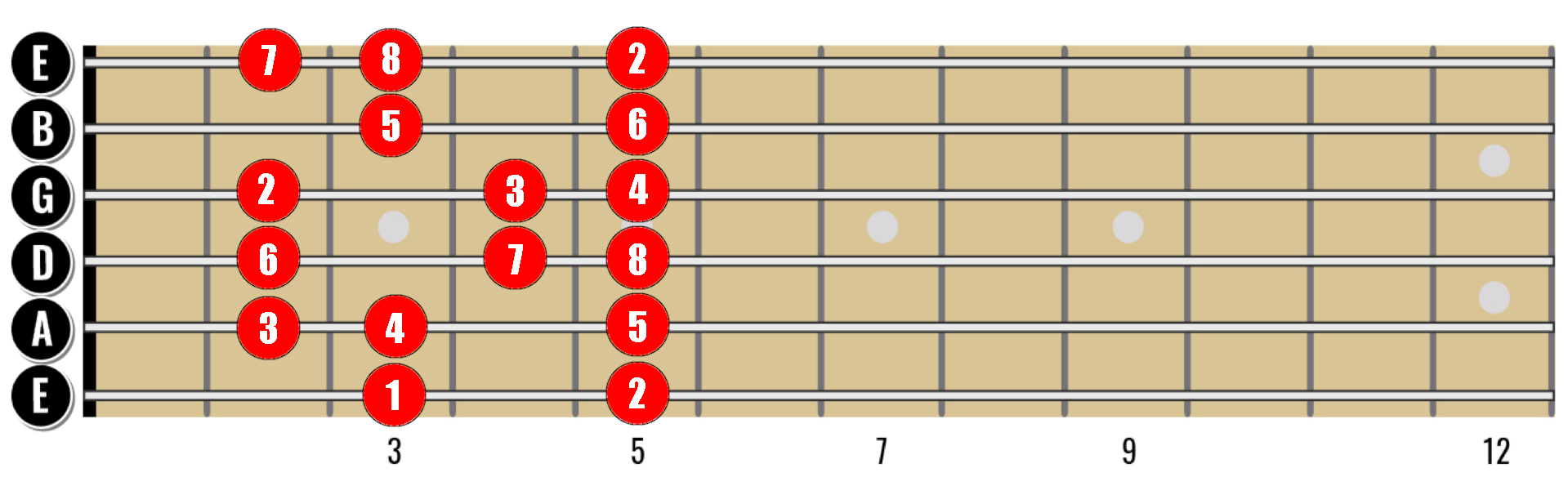
Top Tip: Start easy with the C major pentatonic. Learn the note names within the scale and memorise their positions within the shape. For an extra challenge, assign the interval to each note for deeper understanding. Once comfortable, move the shape around the fretboard into different keys to learn more notes!
You may also enjoy: https://www.playlikeaproguitar.com/blog/UnlockTheFretboard
Common Mistakes To Avoid
- Trying to learn all strings at once
- Memorising without patterns
- Ignoring octaves
- Only practicing scales mechanically
How Fretboard Freedom Speeds This Up
If you want a structured system that teaches:
- Fretboard mastery
- Pentatonic connections
- CAGED navigation
- Intervals
- Arpeggios
- Practical neck visualisation
Check out: https://www.playlikeaproguitar.com/fretboardfreedom
This is designed specifically for guitar players who feel stuck navigating the neck.
Final Thoughts
Learning guitar notes and unlocking the fretboard isn’t about memorising hundreds of random positions. It’s about seeing patterns. Once that happens, the fretboard starts feeling connected.
If you want the full roadmap, start here:
Ultimate Guide:
https://www.playlikeaproguitar.com/blog/UltimateGuidetoLearningGuitarFretboard
Fretboard Freedom:
https://www.playlikeaproguitar.com/fretboardfreedom

