
How to Connect Pentatonic Scale Shapes Across the Neck
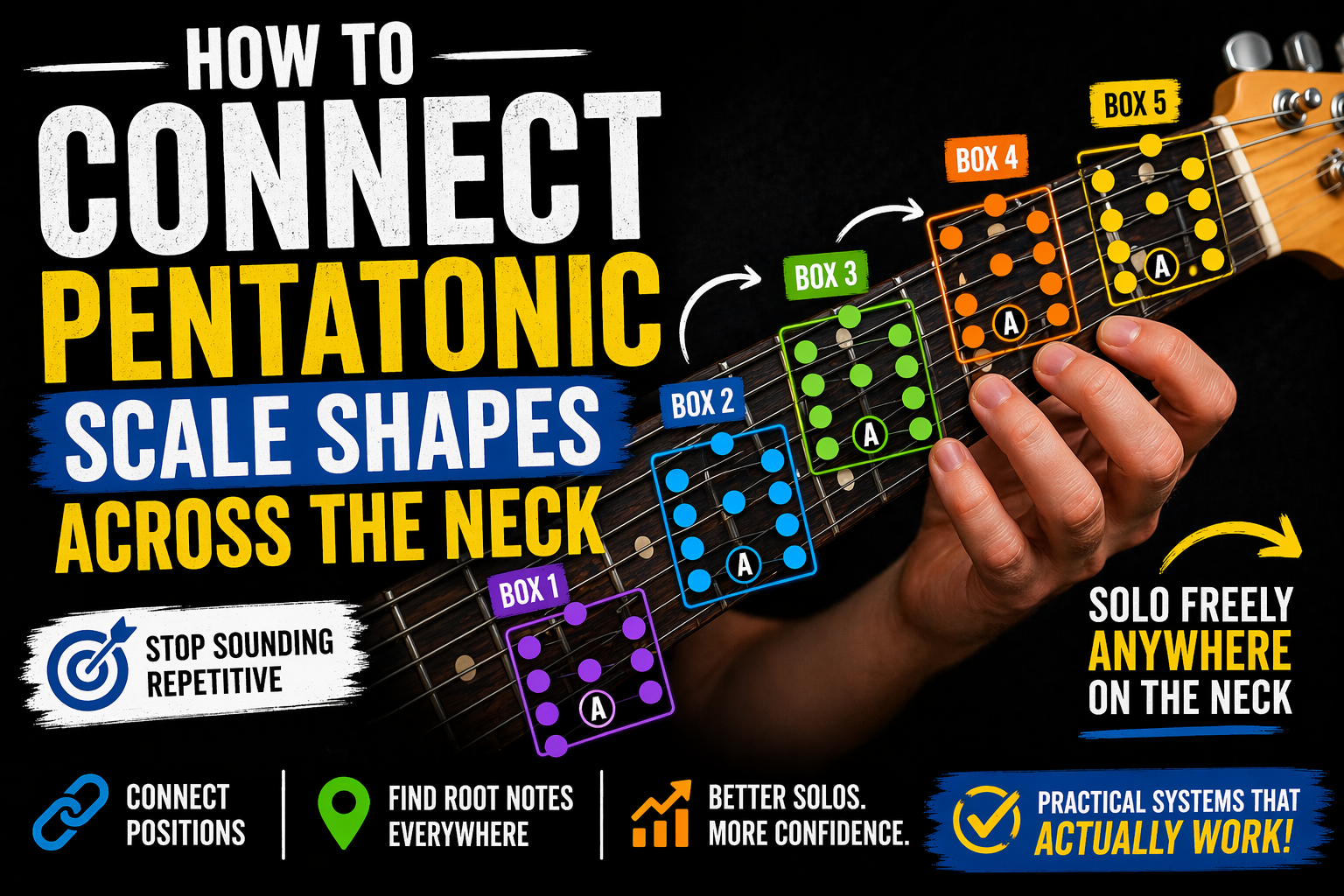
One of the biggest breakthroughs in guitar soloing happens when you stop seeing pentatonic scales as separate boxes.
Most guitar players learn:
Box 1
Box 2
Box 3
Box 4
Box 5
…but they never learn how these shapes actually connect. That’s why solos often feel robotic. You’re jumping between disconnected patterns instead of seeing one complete fretboard map.
The good news?
Connecting pentatonic scales is much easier than most players think. And once you understand this, your solos instantly sound more fluid.
If you're still learning overall fretboard navigation, start here first:
https://www.playlikeaproguitar.com/blog/UltimateGuidetoLearningGuitarFretboard
And if you’re currently trapped in one position, read this first:
https://www.playlikeaproguitar.com/blog/StuckInPentatonicBox1
Why Most Players Struggle To Connect Scale Shapes
The biggest issue? Players memorise shapes individually.
They learn: “Here’s Box 1” Then later: “Here’s Box 2” But nobody explains how these patterns overlap.
This creates fragmented learning. Instead of seeing one giant connected system… the neck feels broken into isolated sections.
Understand Shared Notes Between Shapes
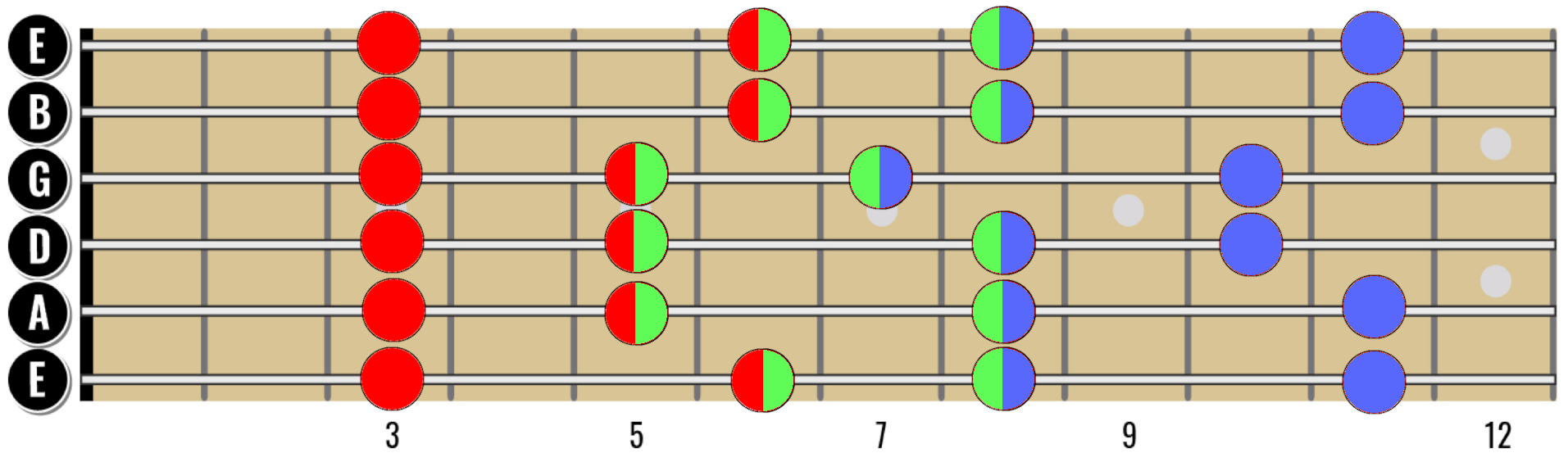
This is where everything changes. Every pentatonic box overlaps with another box.
For example: The top notes of Box 1 often become the starting notes of Box 2.
These overlap zones are your transitions. Practice identifying shared notes between neighbouring shapes.
Learn Horizontal Movement
Most players practice vertically (up and down)
Instead, practice moving across one string horizontally.
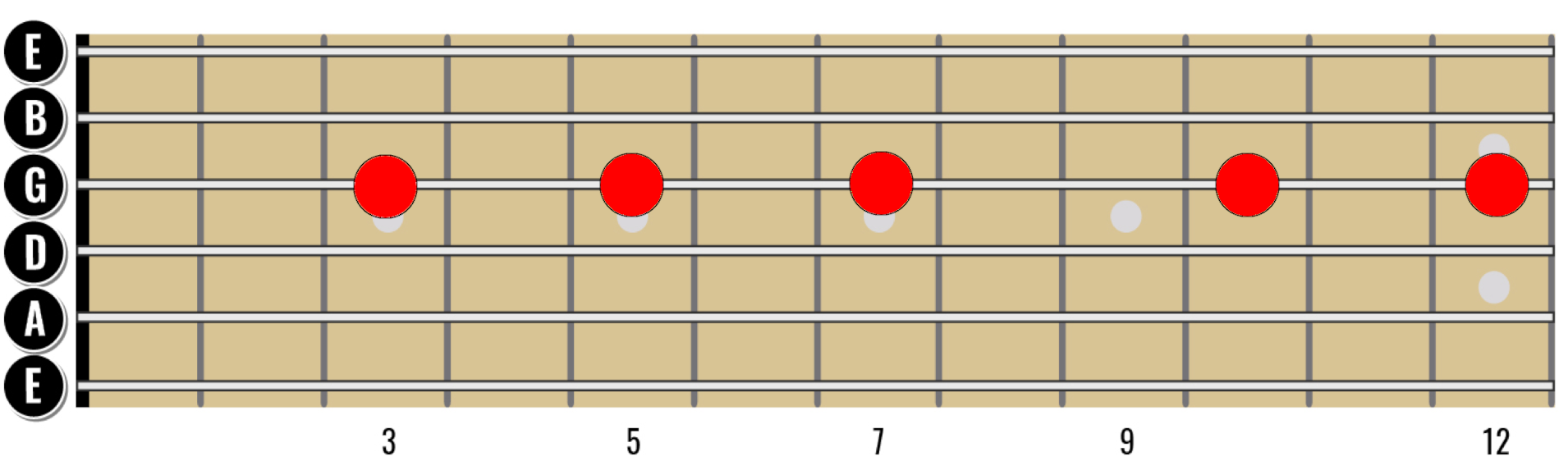
Example:
Play G minor pentatonic only on the G string. Then repeat on the high E string. This helps break vertical thinking and allows you to create different melodic lines that you might not have previously explored.
Use Root Notes As Anchors
Root notes help everything feel connected.
For G minor pentatonic: Find every G note on the neck.
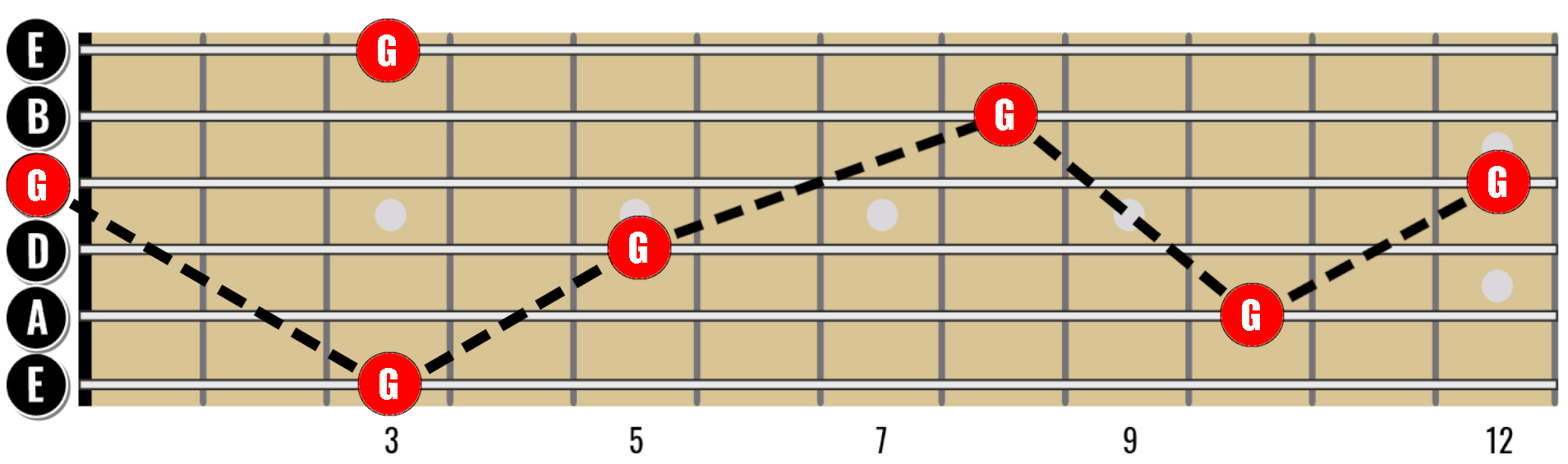
These notes become your navigation checkpoints.
This becomes far easier when you know your notes: https://www.playlikeaproguitar.com/blog/MemoriseNotesOnTheFretboard
Connect Two Shapes At A Time
Don’t try learning all five shapes immediately.
Start with: Box 1 → Box 2
Then: Box 2 → Box 3
Then continue expanding. This keeps things manageable.
Practice With Backing Tracks
Take a backing track. Force yourself to solo in position 1 only. Then Position 2 only. Then combine both.
This trains real-world application and helps you familiarise yourself with each shape.
Learn Phrasing Instead Of Running Scales
This is where many players sound mechanical.
Don’t just run up and down scale patterns. Instead, create musical phrases that move between shapes. This sounds much more professional.
Common Mistakes To Avoid
Learning all 5 shapes at once: Too overwhelming.
Ignoring root notes: You lose orientation.
Only practicing exercises: Apply it musically.
Memorising patterns without understanding notes: Long-term problem.
How Fretboard Freedom Helps
This is exactly what I teach inside Fretboard Freedom.
You’ll learn:
- pentatonic connections
- fretboard visualization
- CAGED integration
- intervals
- arpeggios
- neck navigation systems
Check it out here:
https://www.playlikeaproguitar.com/fretboardfreedom
Final Thoughts
Pentatonic scales shouldn’t feel like five separate boxes. They should feel like one connected roadmap.
Once that clicks… your soloing changes fast.
Start with the full roadmap:
https://www.playlikeaproguitar.com/blog/UltimateGuidetoLearningGuitarFretboard
And dive deeper here:
https://www.playlikeaproguitar.com/fretboardfreedom

