
How To Practice Guitar Arpeggios Across The Neck
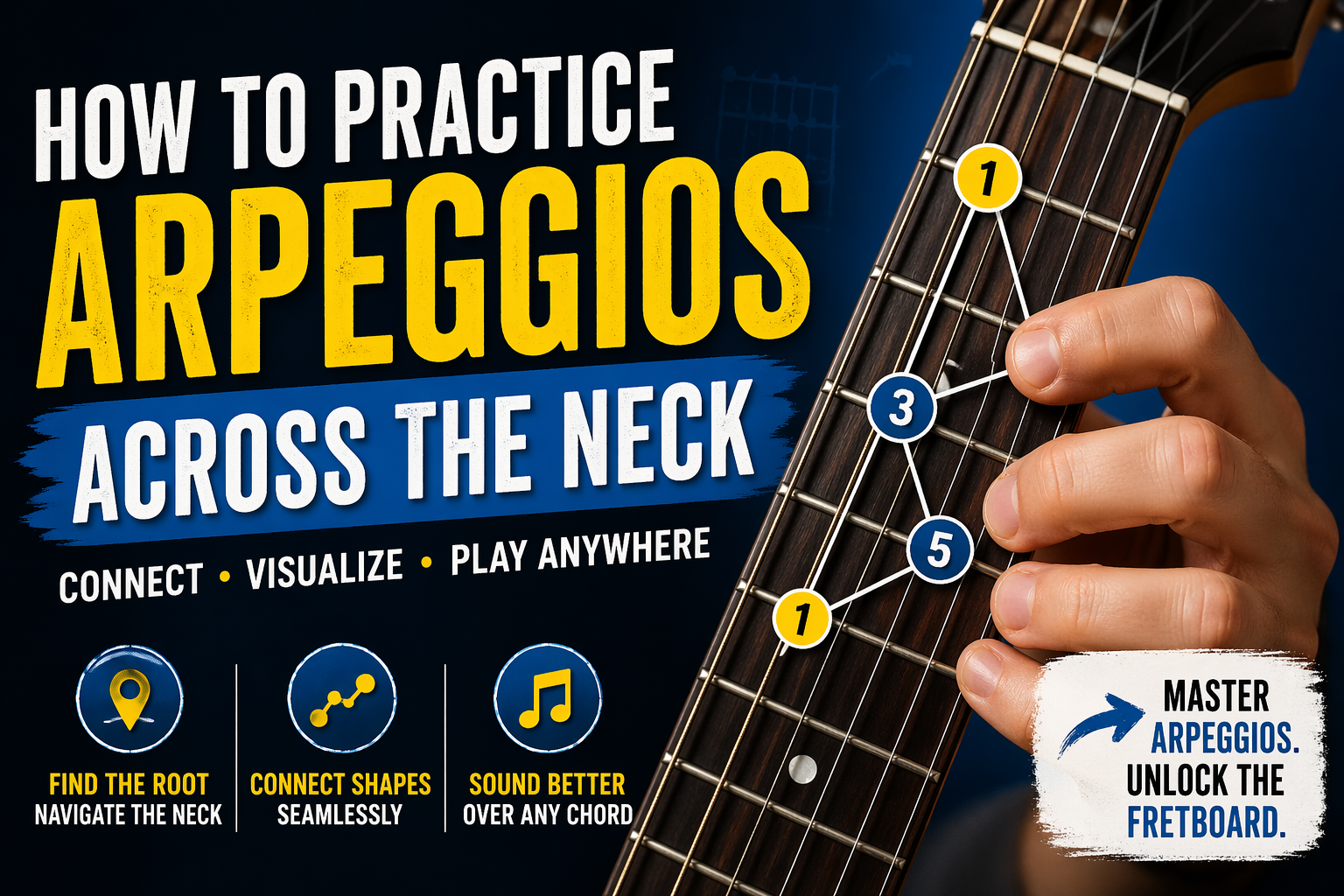
Learning guitar arpeggios is one thing. Actually using them across the neck is where most players get stuck.
A lot of guitarists learn one arpeggio shape… Practice it in one position… And then wonder why they still feel trapped when improvising or navigating the fretboard.
The truth?
Arpeggios become incredibly powerful when you stop seeing them as isolated patterns and start connecting them across the neck.
That’s exactly what this article will help you do.
If you’re brand new to arpeggios, start here first:
https://www.playlikeaproguitar.com/blog/WhatAreGuitarArpeggios
And if you're still learning overall fretboard navigation:
https://www.playlikeaproguitar.com/blog/UltimateGuidetoLearningGuitarFretboard
Why Most Guitar Players Struggle With Arpeggios
Most players make one of two mistakes:
They memorise shapes without understanding notes
or
They only practice one position
This creates the same issue many players experience with pentatonic scales: they feel stuck.
If that sounds familiar, read:
https://www.playlikeaproguitar.com/blog/StuckInPentatonicBox1
Step 1: Start With One Major Arpeggio Shape
Don’t overwhelm yourself. Start with something simple:
A major arpeggio notes:
A, C#, E
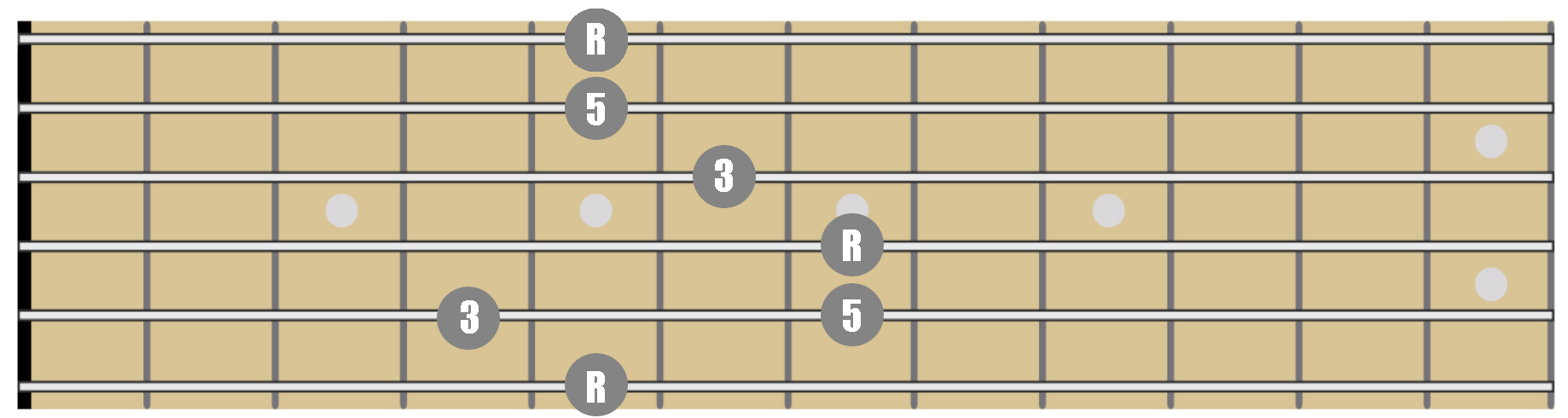
Learn one comfortable position first. Play it slowly. Say the note names out loud.
Step 2: Learn Where The Root Notes Are
This is where arpeggios start making sense. Your root notes act like navigation markers.
For A major, find every A note across the neck. This helps you locate arpeggio shapes faster.
If note memorisation is still difficult:
https://www.playlikeaproguitar.com/blog/MemoriseNotesOnTheFretboard
Step 3: Connect Adjacent Arpeggio Shapes
Once one shape feels comfortable, learn the next nearest position.
For example: 5th fret shape → connect to 9th fret shape
This helps you move across the neck smoothly. Don’t try learning every shape immediately. Focus on two connected shapes first.
Step 4: Practice Horizontal Movement
Most guitar players practice vertically (up and down). Instead, Move horizontally across one string set.
Example: Play A major arpeggio notes on only the G, B and high E strings.
Then move to another area of the neck. This builds real fretboard awareness.
Step 5: Connect Arpeggios To CAGED Shapes
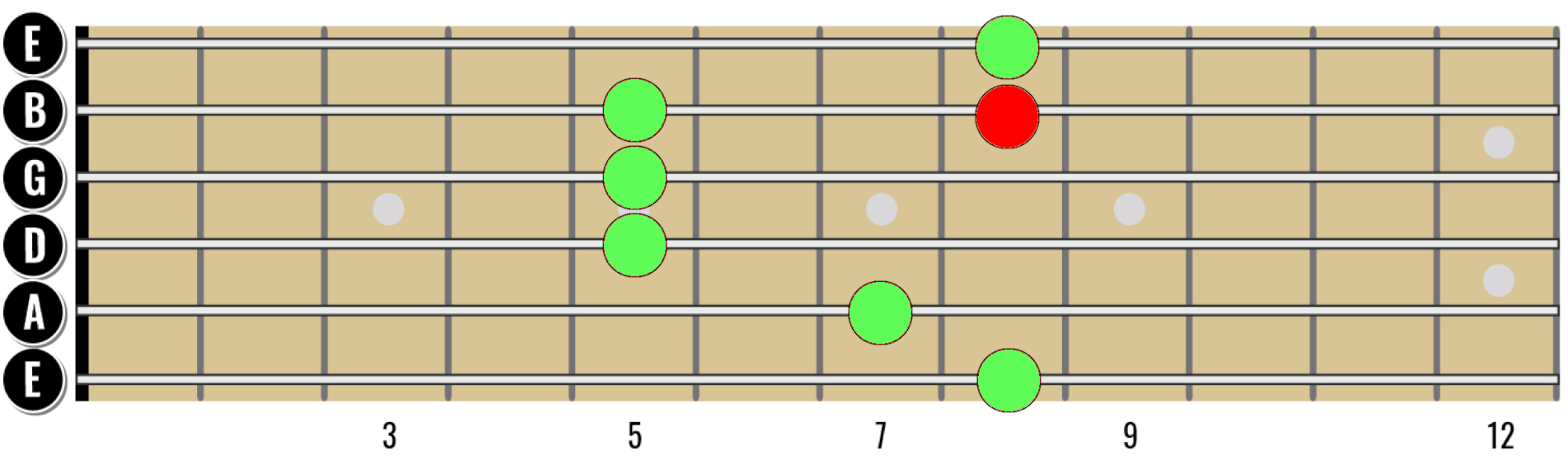
This is where things really click. Arpeggios sit inside your CAGED shapes.
Once you understand this, the neck starts feeling connected.
Read:
https://www.playlikeaproguitar.com/blog/WhatIsCAGEDSystem
And:
https://www.playlikeaproguitar.com/blog/HowToUseCAGEDSystem
Step 6: Practice Over Chord Progressions
This is where arpeggios become musical.
Take a simple progression:
A → D → E
Play each corresponding arpeggio over the backing track. This teaches real-world application and helps you switch shapes between chords - A great skill for targeted improvising!
Step 7: Add Pentatonic Scales
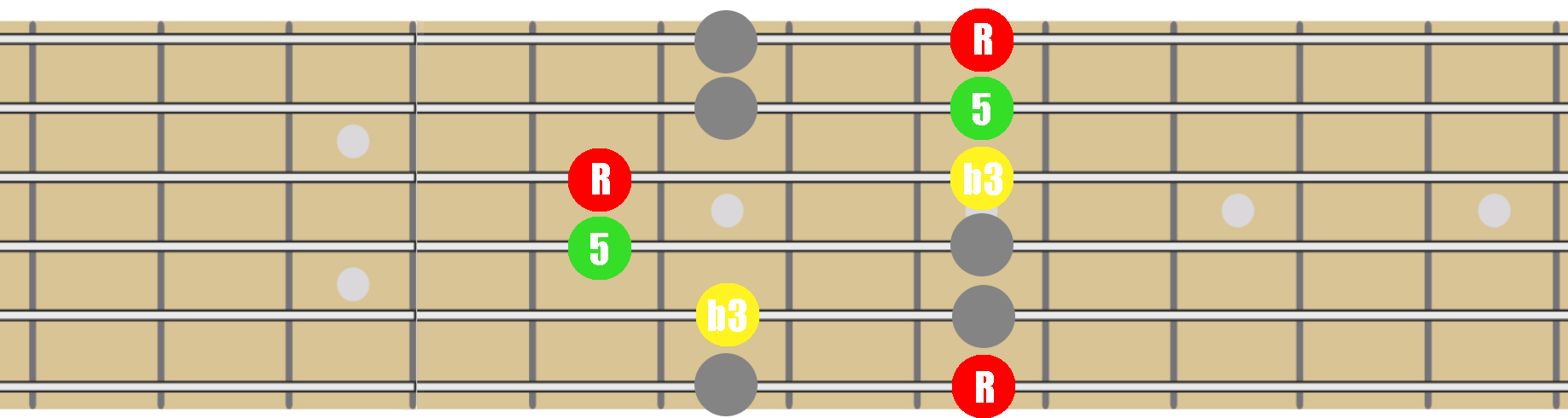
Arpeggios and pentatonics work beautifully together. Use pentatonics for movement. Use arpeggios for strong landing notes.
Read:
https://www.playlikeaproguitar.com/blog/ConnectPentatonicScaleShapes
Daily Practice Routine
Spend 10–15 minutes on:
- one arpeggio shape
- root note mapping
- connecting positions
- playing over backing tracks
Consistency matters more than long sessions.
Common Arpeggio Mistakes
Learning too many shapes too fast
Slow down.
Ignoring note names
This causes long-term confusion.
Never applying arpeggios musically
Huge mistake.
Only practicing vertically
Start moving horizontally.
How Fretboard Freedom Helps
This is exactly why I created Fretboard Freedom. Inside the course you’ll learn:
- arpeggios
- pentatonic connections
- CAGED integration
- intervals
- fretboard visualization
- complete neck freedom
Check it out here:
https://www.playlikeaproguitar.com/fretboardfreedom
Final Thoughts
Arpeggios shouldn’t feel like isolated patterns. They should help you see the fretboard as one connected system. Once you start practicing them across the neck… everything opens up.
Start with the full roadmap:
https://www.playlikeaproguitar.com/blog/UltimateGuidetoLearningGuitarFretboard
Then accelerate your progress here:

