
The Ultimate Guide to Guitar Improvisation (Complete Beginner to Advanced Guide)
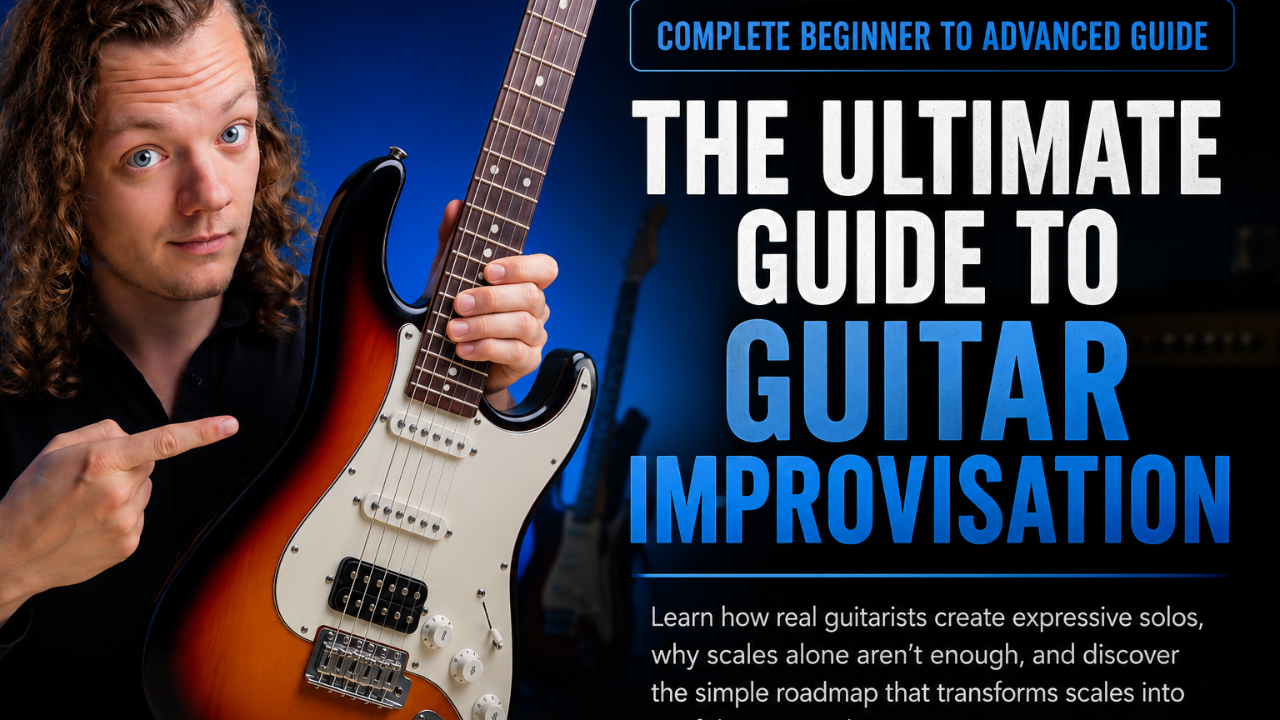
The Ultimate Guide
to Guitar Improvisation
Learn how real guitarists create expressive solos, why scales alone aren't enough, and discover the simple roadmap that transforms scales into confident musical improvisation.
What is Guitar Improvisation?
Guitar improvisation is the ability to create music in real time. Rather than memorising solos, you're making musical decisions as you play using melody, rhythm, phrasing, harmony and your ear. Great improvisers aren't guessing—they're hearing ideas and expressing them naturally on the guitar.
“I know scales...”
...but I have no idea how to turn them into real music.
“I hear ideas...”
...but I can't find those sounds on the fretboard.
“My solos sound like exercises...”
...instead of expressive musical phrases that people remember.
Your Improvisation Roadmap
Most guitarists try to skip straight to advanced solos. The problem is, improvisation is a skill that builds one layer at a time. Master each step below, and you'll develop the confidence to create musical solos naturally.
Minor Pentatonic
Learn the scale that forms the foundation of countless solos.
Melody
Turn scales into phrases that people can actually remember.
Rhythm
Discover why timing matters more than playing lots of notes.
Harmony
Follow chord changes instead of relying on luck.
Ear Training
Hear an idea, find it on the fretboard and play it confidently.
The Biggest Mistake Guitarists Make
Trying to learn Step 5 before mastering Step 1. Every great improviser builds these skills one layer at a time, and each layer makes the next dramatically easier.
Why Most Guitarists Struggle With Improvisation
Most players don't struggle because they lack information. They struggle because nobody has shown them how all the pieces fit together. If any of these sound familiar, you're not alone.
The Good News
None of these problems are caused by a lack of talent. They're simply the result of practising disconnected ideas instead of following a structured system. Once you understand how melody, rhythm, harmony and ear training work together, improvisation starts to feel natural.
The Biggest Myth About Guitar Improvisation
The internet has convinced an entire generation of guitarists that becoming a better soloist simply means learning more scales. While scales are essential, they're only the raw materials. Musical improvisation comes from knowing how to use them.
Play Like A Pro Insight
Think of scales like the alphabet. Knowing every letter doesn't automatically make you a great writer. In the same way, knowing every scale won't automatically make you a great improviser. The goal isn't to collect more scales—it's to learn how to turn them into music.
The Five Building Blocks of Great Guitar Solos
Every expressive guitar solo is built on the same core principles. Rather than focusing on speed or learning endless scales, concentrate on mastering these five building blocks and your improvisation will naturally become more musical.
1. Melody
The best solos are memorable because they sound like songs. If you can't imagine singing a phrase, it's worth asking whether it's really melodic.
2. Rhythm
Great rhythm often has a bigger impact than playing more notes. Strong timing can make even the simplest phrases sound exciting.
3. Phrasing
Think like a singer. Leave space, repeat ideas and develop simple musical phrases instead of constantly introducing new ones.
4. Harmony
Understanding the chords beneath your solo allows you to choose notes with purpose instead of relying on luck. This is where chord tones become incredibly powerful.
5. Ear Training
Ultimately, improvisation comes down to one simple process: hear an idea, find it on the guitar and express it naturally. Everything else supports this skill.
Play Like A Pro Insight
Most guitarists spend years trying to improve one of these skills while ignoring the others. The players who make the fastest progress develop all five together, because each one strengthens the others.
The Play Like A Pro Philosophy
Improvisation is not about memorising endless shapes, scales and licks. It is about building a connection between what you hear, what you understand and what you can play on the guitar.
Hear
First, you learn to hear musical ideas clearly instead of relying only on finger patterns.
Understand
Then, you understand where those ideas come from through scales, chord tones, rhythm and phrasing.
Play
Finally, you express those ideas confidently on the guitar without feeling trapped in scale shapes.
Hear → Understand → Play
When these three stages work together, improvisation stops feeling like guesswork and starts feeling like a natural musical conversation.
How to Practise Guitar Improvisation
The best improvisers don't practise for endless hours—they practise with purpose. A simple, consistent routine will improve your playing far more than constantly searching for new scales or exercises.
Learn One Musical Idea
Focus on one new concept rather than overwhelming yourself with lots of information.
Improvise With a Backing Track
Apply what you've learned immediately by creating music instead of repeating exercises.
Sing Before You Play
Develop the connection between your ears and your fingers by hearing ideas first.
Record Yourself
Listening back reveals strengths and weaknesses you won't notice while you're playing.
Repeat Your Best Ideas
Whenever you discover a phrase you like, repeat it, develop it and make it part of your musical vocabulary.
Stay Consistent
Twenty focused minutes every day will always outperform occasional marathon practice sessions.
Play Like A Pro Insight
Consistency beats complexity. It's far better to practise one musical concept thoroughly every day than to constantly jump between new scales, licks and techniques without ever applying them.
Common Guitar Improvisation Mistakes
Even dedicated guitarists can slow their progress by focusing on the wrong things. Avoid these common mistakes and you'll develop your improvisation skills much faster.
❌ Practising Scales Without Making Music
Running scales repeatedly won't teach you how to improvise.
✔ Do This Instead
Use every scale to create melodies, phrases and ideas over backing tracks.
❌ Learning Hundreds of Licks
Collecting licks doesn't automatically improve your improvisation.
✔ Do This Instead
Understand why a lick works so you can adapt it in different musical situations.
❌ Playing Constantly
Filling every gap with notes removes musical expression.
✔ Do This Instead
Leave space between phrases. Great solos breathe just like great conversations.
❌ Ignoring Rhythm
Many players focus entirely on note choice while overlooking rhythm.
✔ Do This Instead
Develop strong timing and phrasing. Rhythm is often what makes a solo memorable.
Play Like A Pro Insight
Great improvisers don't simply know more information—they apply what they know more effectively. Focus on creating music, not just collecting knowledge, and your solos will become more expressive with every practice session.
Frequently Asked Questions
These are some of the most common questions guitarists ask when learning to improvise.
How long does it take to learn guitar improvisation?
With consistent practice, many guitarists begin creating simple musical solos within a few weeks. Becoming a confident improviser takes longer, but every practice session builds your musical vocabulary and strengthens the connection between your ears and your fingers.
Do I need to know music theory to improvise?
No. You can begin improvising with very little theory. However, understanding how scales, chords and harmony work together will make improvisation far easier and help you create more musical solos.
What scale should I learn first?
The Minor Pentatonic Scale is the perfect starting point. It's easy to learn, works in countless musical styles and provides the foundation for many great guitar solos.
Why do my solos sound like scales?
Because you're thinking about finger patterns instead of musical phrases. Focus on melody, rhythm and phrasing rather than simply moving up and down scale shapes.
Is improvisation only used in blues and rock?
Not at all. Improvisation plays an important role in blues, rock, jazz, country, fusion, pop and many other styles of music. The core principles remain the same regardless of genre.
Play Like A Pro Insight
Every great improviser was once a beginner asking these same questions. The difference isn't natural talent—it's following a structured learning path and applying what you practise consistently.
Continue Learning
Improvisation is a journey, and every skill builds on the last. Continue exploring these guides to deepen your understanding and become a more confident guitarist.
What Is Guitar Improvisation?
Discover what improvisation really is and how professional guitarists create expressive solos.
Read Guide →How To Improvise On Guitar
Learn a practical, step-by-step method for creating expressive guitar solos.
Read Guide →How To Play What You Hear
Bridge the gap between your musical ear and the fretboard with practical ear training.
Read Guide →Guitar Phrasing Guide
Learn how phrasing transforms scales into expressive, memorable guitar solos.
Read Guide →Pentatonic Scale Guide
Master the most important scale for blues, rock and modern improvisation.
Read Guide →Keep Building Your Skills
The more you connect these concepts together, the more natural improvisation becomes. Each guide expands on the ideas you've learned here, helping you become a more confident and expressive guitarist.
Stop Practising Scales.
Start Creating Music.

If you've enjoyed this guide but still find yourself thinking, "I know the scales... I just don't know how to turn them into real solos," then Guitar Soloing Made Simple was built specifically for you.
✔ Build Musical Solos
Learn how to create expressive phrases instead of simply running scales.
✔ Follow Chord Changes
Understand harmony so every note sounds intentional and musical.
✔ Play What You Hear
Develop the connection between your ears and your fingers so ideas flow naturally.
✔ Practise With Confidence
Follow a structured system that shows you exactly what to practise next.
Guitar Soloing Made Simple
Inside the course, I'll guide you step by step through the complete process of turning scales into expressive solos, following chord changes with confidence, developing great phrasing and finally learning how to improvise naturally.
Explore Guitar Soloing Made Simple →Join hundreds of guitarists who have stopped memorising patterns and started creating real music.

