
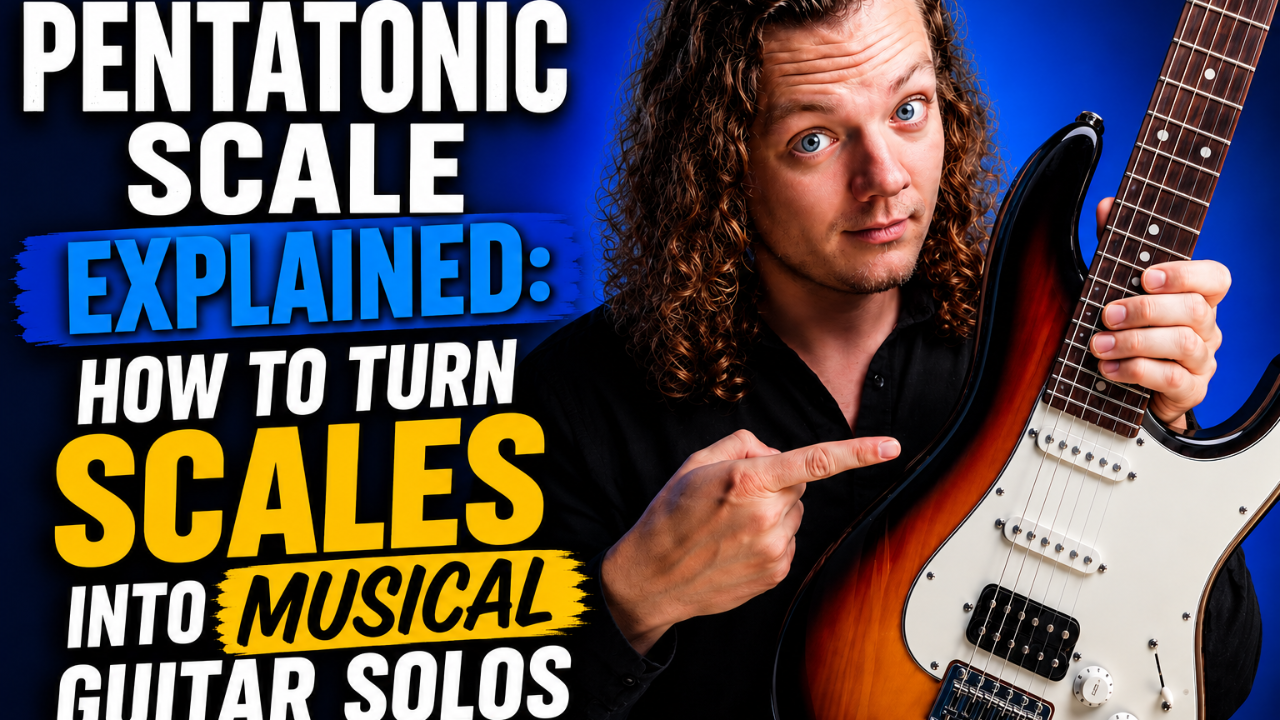
The Pentatonic Scale Explained: How to Turn Scales Into Musical Guitar Solos
From Scale Shapes to Musical Solos
The Pentatonic Scale Explained: How to Turn Scales Into Musical Guitar Solos
Ask almost any guitarist what scale they learnt first...
...and they'll probably say the minor pentatonic scale.
For good reason.
It's Simple
It's Versatile
It's Everywhere
It's been used in thousands of incredible guitar solos.
But here's the problem...
Most guitarists learn the pentatonic scale and then have absolutely no idea what to do with it.
They memorise the shape.
They can play it up and down.
But when it's time to improvise...
They freeze.
If that sounds familiar, the scale isn't the problem.
The problem is nobody showed you how to turn it into music.
That's exactly what this guide is about.
What Is the Pentatonic Scale?
The word pentatonic simply means five notes.
Pentatonic Scale
5 Notes
A stripped-back collection of notes that's incredibly useful for improvisation.
Major & Minor Scales
7 Notes
Traditional major and minor scales contain seven different notes.
That simplicity is one of the pentatonic scale's biggest strengths.
Because there are fewer notes to choose from, it's easier to create phrases that sound musical without constantly worrying about “wrong” notes.
Simple Doesn't Mean Limited
The pentatonic scale gives you fewer notes to think about—which means you can spend more time focusing on the things that actually make a solo sound musical.
Why Is the Pentatonic Scale So Popular?
The pentatonic scale appears everywhere.
Players like David Gilmour, Eric Clapton, B.B. King, Slash, Angus Young and Gary Moore all built countless iconic solos around pentatonic ideas.
Notice something?
They're not famous because they knew lots of scales.
They're famous because of how they used one scale.
Learning the Shape Isn't the Goal
This is where many guitarists get stuck.
Eventually they memorise all five positions.
But when someone says:
“Take a solo...”
They immediately start running the pattern they've memorised.
The result?
It sounds like scale practice.
Not music.
Remember:
The goal has never been to memorise shapes. The goal is to make music with them.
Why Your Pentatonic Solos Sound Like Scales
If your solos sound repetitive, it's usually because you're relying on the pattern rather than your ears.
Common signs include:
✕ Playing straight up and down the scale.
✕ Starting every phrase on the root note.
✕ Never repeating ideas.
✕ Filling every gap with notes.
✕ Using the same rhythm all the time.
The Scale Isn't the Problem
None of these are problems with the pentatonic scale itself. They're problems with how the scale is being used.
Five Ways to Make the Pentatonic Scale Sound Musical
Once you know the shape, the real work begins. These five ideas will help you turn the pentatonic scale into actual music.
1
Play Fewer Notes
One of the quickest ways to improve your solos is to play less.
Choose just three or four notes from the scale.
Now see how many different musical ideas you can create.
You'll quickly discover that creativity comes from phrasing, rhythm and expression—not from having more notes available.
2
Think in Phrases
Stop thinking about scales.
Start thinking about sentences.
A great guitar solo is a conversation. Every phrase should say something.
Say Something
Create one clear musical idea.
Pause
Give the phrase space to breathe.
Answer It
Respond with a related phrase.
3
Repeat Your Ideas
Beginners often think every phrase has to be different.
Experienced players know that repetition creates memorable solos.
Repeat it.
Change the ending.
Now you're developing an idea instead of jumping randomly around the fretboard.
4
Target the Chords
The pentatonic scale becomes much more powerful when you combine it with the chords underneath.
Instead of treating every note equally, start aiming for notes that belong to the current chord.
This instantly makes your solos sound more connected to the music.
Scale-Only Thinking
Play notes from the shape and hope they fit.
Harmony-Aware Thinking
Hear the chord change and aim for notes that belong to it.
5
Use Expression
The notes are only half the story.
Make the Scale Sound Human
These techniques can make even the simplest pentatonic phrases sound expressive, vocal and emotionally convincing.
Should You Learn All Five Pentatonic Shapes?
Eventually...
Yes.
But not immediately.
One shape used musically is far more valuable than five shapes you don't really understand.
1. Master One Position
Learn how to create real phrases before adding more fretboard territory.
2. Connect the Next Shape
Expand naturally rather than memorising five disconnected boxes.
3. Build Gradually
Add positions as your musical confidence grows.
Make the Fretboard Smaller
Trying to memorise everything at once makes the neck feel overwhelming. Connecting one position at a time makes the fretboard feel much more logical.
Pentatonic Scale vs Musical Soloing
Here's something I tell students all the time.
Knowing the pentatonic scale is like learning the alphabet.
It's essential — but nobody becomes a great writer simply because they know the alphabet.
Scales Give You...
Notes.
Patterns.
Possibilities.
You Create...
Phrasing.
Rhythm.
Melody.
Emotion.
Scales Give You the Notes
You create the music. That's where phrasing, rhythm, melody and ear training become so important.
The Play Like A Pro Philosophy
At Play Like A Pro Guitar, I don't teach scales as patterns to memorise.
I teach them as musical tools.
The goal isn't to know more scales. The goal is to understand how to turn those scales into expressive solos.
Hear
Hear the phrase.
Understand
Understand where it comes from.
Play
Play it confidently.
Hear → Understand → Play
That's how scale shapes stop feeling like exercises and start becoming music.
Five Pentatonic Practice Ideas
Instead of simply running the scale, try these exercises.
1. Improvise using only three notes.
2. Create one phrase and repeat it three times.
3. Leave two beats of silence after every phrase.
4. Play over a backing track instead of practising in isolation.
5. Sing your phrase before finding it on the guitar.
Build Musicianship, Not Just Finger Memory
These exercises train you to use the pentatonic scale as a musical language instead of simply remembering where your fingers should go.
Frequently Asked Questions
Is the Pentatonic Scale Enough to Improvise?
Absolutely. Many legendary guitar solos use little more than the minor pentatonic scale. The key is learning how to phrase, develop and repeat musical ideas rather than simply running through the shape.
Which Pentatonic Scale Should I Learn First?
Most guitarists begin with the minor pentatonic scale because it's simple, versatile and incredibly useful across blues, rock, country and many other styles.
Do I Need to Learn All Five Positions?
Eventually, yes. But focus on understanding one position thoroughly before adding more. One shape you can use musically is far more valuable than five shapes you only know mechanically.
Why Do My Pentatonic Solos Sound Boring?
Usually because you're focusing on the scale shape rather than melody, rhythm and phrasing. Try using fewer notes, repeating ideas, leaving more space and varying your rhythm before learning another scale.
The Important Part
The pentatonic scale is already powerful enough to create great solos. What matters is learning how to use it like a musician rather than simply memorising where the notes are.
Continue Learning
Take the next step with these guides:
The Ultimate Guide to Guitar Improvisation
Explore the complete roadmap from beginner concepts through to advanced improvisation.
Read Guide →How to Improvise on Guitar
Follow a practical step-by-step approach to creating more musical solos.
Read Guide →Guitar Phrasing Guide
Learn how rhythm, repetition, dynamics and space can transform your solos.
Read Guide →How to Play What You Hear on Guitar
Develop the connection between your ears and the fretboard.
Read Guide →Why Most Guitarists Can't Improvise
Discover why knowing scales isn't enough to create expressive solos.
Read Guide →Ready for the Next Step?
Ready to Turn the Pentatonic Scale Into Real Solos?
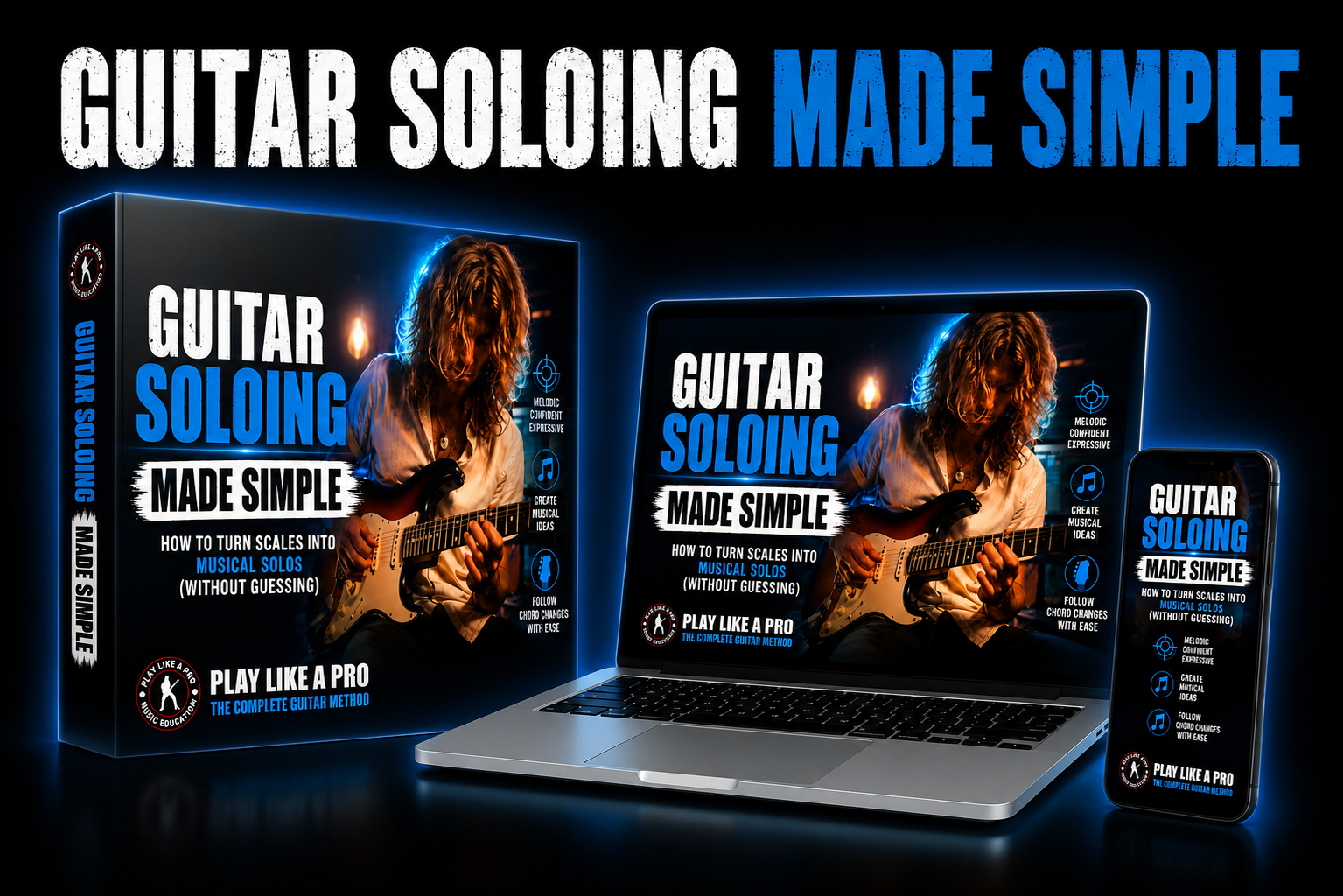
If you're tired of running pentatonic patterns without knowing how to make them sound musical, Guitar Soloing Made Simple was built for you.
Inside the course, you'll learn how to transform the pentatonic scale into expressive, melodic solos by developing phrasing, following chord changes, connecting the fretboard and learning to play what you hear.
You already know the scale. Now learn how to make it sound like music.

