
Why Most Guitarists Can't Improvise (Even If They Know Scales)
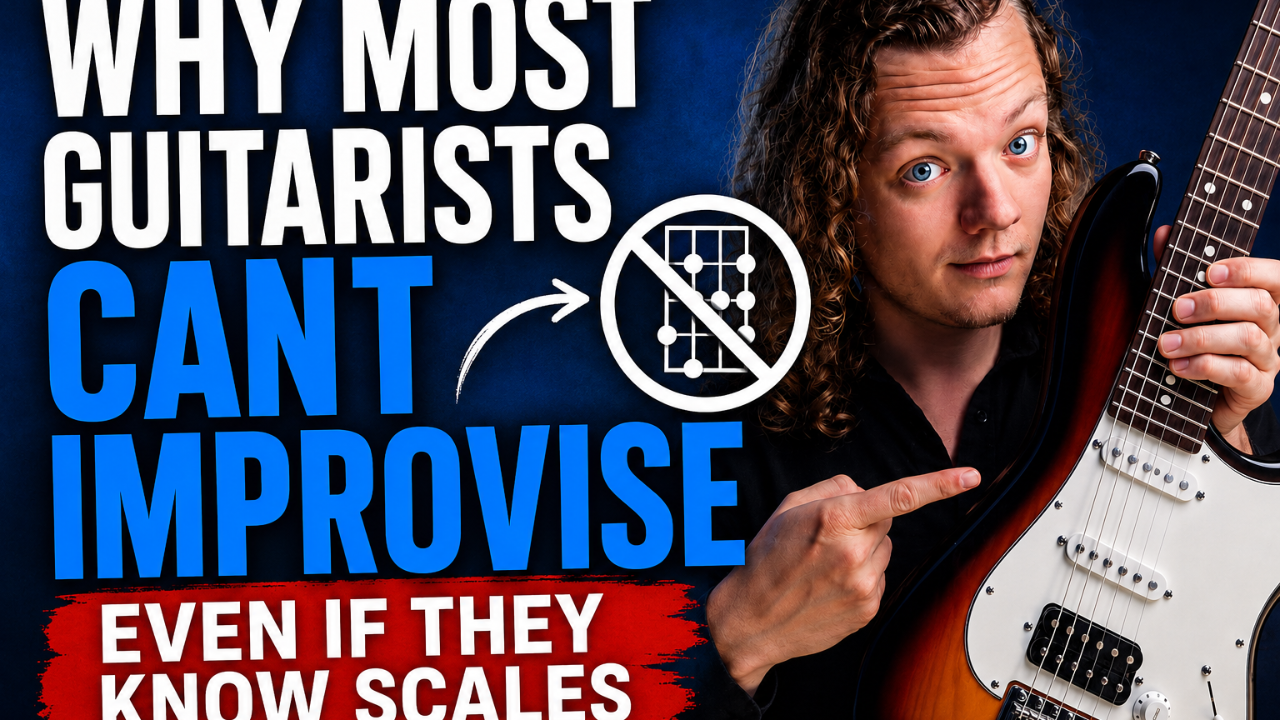
Why Knowing Scales Isn't Enough
Why Most Guitarists Can't Improvise
Even If They Know Scales
Have you ever found yourself thinking...
“I know all the pentatonic shapes.”
“I've learnt loads of licks.”
“I've watched hundreds of YouTube lessons.”
“So why can't I actually improvise?”
If that's you, let me reassure you of something.
You're not behind.
You're not untalented.
And you're definitely not alone.
In fact, this is one of the biggest frustrations I hear from students before they join my courses.
They know plenty of information...
But when somebody presses play on a backing track...
Everything falls apart.
The Problem Isn't That You Don't Know Enough
Most guitarists think the solution is to learn more.
Another Scale
Another Mode
Another Lick
Another Video
Information ≠ Application
You can know every pentatonic position on the neck and still have absolutely no idea how to create a solo that sounds musical.
Imagine someone handing you every word in the English language.
Would that automatically make you a great storyteller?
Of course not. Music works exactly the same way.
You've Been Taught Shapes Instead of Music
Think back to how you first learnt scales. You probably learnt something like this:
“Put your first finger here...”
“Second finger there...”
“Repeat this pattern.”
There's nothing wrong with learning shapes. They're useful.
The problem is that nobody explains what to do with them afterwards.
What Usually Happens
You run the scale from bottom to top. Again. And again. And again.
What You Actually Need
Learn how to turn those notes into rhythm, melody and musical phrases.
The Result
Eventually you know the pattern perfectly... but you're still not making music.
Scales Don't Create Solos
This might sound controversial...
Scales don't create solos.
You do.
Scales simply give you a collection of notes that are likely to sound good together. They're the ingredients. They're not the finished meal.
The Ingredients
Scales give you notes, shapes and possibilities.
The Music
You create the rhythm, phrasing, emotion and musical direction.
Play Like A Pro Insight
The difference between a beginner and a great improviser usually isn't how many scales they know. It's what they're able to do with the scales they already have.
You're Thinking About Fingers Instead of Sound
Here's something I see all the time.
A backing track starts and the guitarist immediately starts thinking...
“Which box am I in?”
“What position is this?”
“Which scale fits?”
They're staring at their fingers instead of listening to the music. Experienced improvisers often work the other way around.
Shape-First Thinking
Find a scale shape → move your fingers → hope something musical comes out.
Sound-First Thinking
Hear an idea → find it on the guitar → express the phrase you actually wanted to play.
That's a Completely Different Way of Thinking
The scale still matters. The difference is that the scale becomes a tool for expressing an idea rather than the thing generating the idea.
You Never Learnt to Build Musical Phrases
Most guitarists practise notes.
Very few practise phrases.
Think about your favourite singers. They don't sing endless scales.
Ideas.
Questions.
Answers.
Conversations.
Your guitar solos should work exactly the same way. Instead of trying to fill every bar with notes, start with one simple musical phrase.
Repeat it.
Change it slightly.
Answer it.
Now you're making music.
You're Ignoring the Chords
Another common mistake is treating every backing track the same.
Players often learn one scale and use it over everything. Sometimes it works. Sometimes it sounds average.
The Reason Is Simple
The chords underneath your solo matter.
Scale-Only Approach
Play notes from the same scale regardless of which chord is happening underneath.
Harmony-Aware Approach
Recognise the chord change and target notes that connect your phrase to the harmony.
As you begin targeting chord tones and outlining the harmony, your solos immediately become more connected to the music.
One of the Biggest Breakthroughs
This is where improvisation starts to feel less like playing a scale over a backing track and more like actually playing with the music.
You're Trying to Impress Instead of Communicate
It's easy to believe that better solos mean more.
More Notes.
Faster Runs.
More Complicated Scales.
But listen to some of the greatest guitar solos ever recorded.
Many of them are surprisingly simple. They're memorable because they communicate emotion—not because they're technically difficult.
Your audience doesn't care how many notes you know.
They care how your playing makes them feel.
Music Is Communication
Technique gives you more ways to express yourself. But technique only becomes meaningful when there's something musical behind it.
The Missing Link: Ear Training
Perhaps the biggest gap in most guitar education is this:
Nobody teaches players how to connect what they hear with what they play.
Instead, they memorise patterns and hope inspiration will appear.
Real improvisation works differently.
Hear
Hear a musical idea clearly in your head.
Recognise
Understand where that sound fits within the music.
Play
Find the idea on the fretboard and express it confidently.
The Stronger This Connection Becomes...
The less dependent you become on memorised shapes, and the more naturally your own musical ideas begin to come through the guitar.
The Play Like A Pro Approach
At Play Like A Pro Guitar, I teach improvisation a little differently.
Instead of asking students to memorise more and more information, we focus on learning how to apply what they already know.
Hear
Hear the musical idea first.
Understand
Understand why it works and where it fits.
Play
Play it confidently on the guitar.
Hear → Understand → Play
That's the difference between practising scales and actually creating music.
So... What Should You Practise Instead?
If you've spent years collecting scales and still don't feel confident improvising, I'd suggest shifting your focus away from gathering more information and towards building musicianship.
Create Short Melodic Phrases
Practise saying something musical with fewer notes.
Play Over Backing Tracks
Apply what you know in a real musical context.
Follow Chord Changes
Start connecting your phrases to the harmony underneath.
Sing Before You Play
Let your ear generate the idea before your fingers take over.
Listen to Great Solos
Study melody, rhythm, phrasing and how strong ideas are developed.
Develop Rhythm and Phrasing
Focus on when you play, not just which notes you choose.
Record Yourself and Listen Back
Identify the phrases that sound musical, spot the habits holding you back and gradually refine your own voice.
These skills build something far more valuable than another scale shape.
They build musicianship.
Key Takeaways
If you only remember a few things from this article, let them be these:
1. Knowing scales doesn't automatically make you an improviser.
2. Great solos are built from melody, rhythm and phrasing.
3. Improvisation is about hearing ideas, not just memorising patterns.
4. Chord awareness makes your solos sound intentional.
5. Consistent application beats collecting more information.
Frequently Asked Questions
These are some of the most common questions guitarists ask when they feel stuck with improvisation.
Why Do My Guitar Solos Always Sound Like Scales?
Because you're thinking about finger patterns rather than creating musical phrases. Focus on rhythm, melody, repetition and space instead of simply moving through scale shapes.
Do I Need to Learn More Scales?
Probably not. Most guitarists already know enough notes to create great solos. The real challenge is learning how to use the notes you already know musically.
Why Do I Freeze Over Backing Tracks?
Usually because you're trying to remember shapes and patterns instead of listening to the music. Start with very short phrases, leave space and gradually build confidence from there.
What's the Fastest Way to Improve My Improvisation?
Spend less time memorising new information and more time applying what you already know over real music. Backing tracks, phrase development, ear training and recording yourself are all far more valuable than constantly collecting new scale shapes.
The Real Shift
The moment you stop asking, “What else do I need to learn?” and start asking, “How can I make music with what I already know?” is when improvisation starts to change.
Continue Learning
Continue your improvisation journey with these guides.
The Ultimate Guide to Guitar Improvisation
Explore the complete roadmap from beginner concepts through to more advanced improvisation.
Read Guide →How to Improvise on Guitar
Follow a practical step-by-step system for building expressive solos.
Read Guide →How to Play What You Hear on Guitar
Strengthen the connection between your ears and your fingers.
Read Guide →Guitar Phrasing Guide
Learn how rhythm, repetition and space turn scale notes into expressive phrases.
Read Guide →Pentatonic Scale Guide
Master the scale behind countless blues, rock and modern guitar solos.
Read Guide →Ready for the Next Step?
Ready to Turn Scales Into Music?

If this article felt familiar, then you've probably reached the point where learning more scales isn't the answer.
Guitar Soloing Made Simple was created to bridge the gap between knowing scales and actually making music.
Inside the course you'll learn how to build musical phrases, connect the fretboard, follow chord changes and develop the confidence to improvise naturally without relying on memorised patterns.
Stop sounding like you're practising scales. Start creating expressive guitar solos.

