
What Is Guitar Improvisation? A Beginner's Guide to Playing Music Naturally
Beginner's Guide
What Is Guitar Improvisation?
A Beginner's Guide to Playing Music Naturally
If you've ever watched your favourite guitarist play an incredible solo and wondered...
“Are they making this up on the spot?”
The answer is often yes. That's guitar improvisation.
What is guitar improvisation?
Guitar improvisation is the ability to create music in real time using your ears, your musical understanding and your experience on the guitar. It is not random guessing, and it is not something only naturally gifted players can do.
Create in Real Time
Improvisation means making musical decisions as you play.
Use Your Ear
You learn to hear ideas and find them on the guitar.
Express Yourself
Instead of repeating memorised solos, you create your own musical ideas.
What Does Improvisation Mean?
Improvisation simply means creating music in the moment. Instead of performing a solo you've memorised note for note, you're making musical decisions as
...The Ultimate Guide to Guitar Improvisation (Complete Beginner to Advanced Guide)
The Ultimate Guide
to Guitar Improvisation
Learn how real guitarists create expressive solos, why scales alone aren't enough, and discover the simple roadmap that transforms scales into confident musical improvisation.
What is Guitar Improvisation?
Guitar improvisation is the ability to create music in real time. Rather than memorising solos, you're making musical decisions as you play using melody, rhythm, phrasing, harmony and your ear. Great improvisers aren't guessing—they're hearing ideas and expressing them naturally on the guitar.
“I know scales...”
...but I have no idea how to turn them into real music.
“I hear ideas...”
...but I can't find those sounds on the fretboard.
“My solos sound like exercises...”
...instead of expressive musical phrases that people remember.
Your Improvisation Roadmap
Most guitarists try to skip straight to advanced solos. The problem is, improvisation is a skill that builds
...How To Practice Guitar Arpeggios Across The Neck
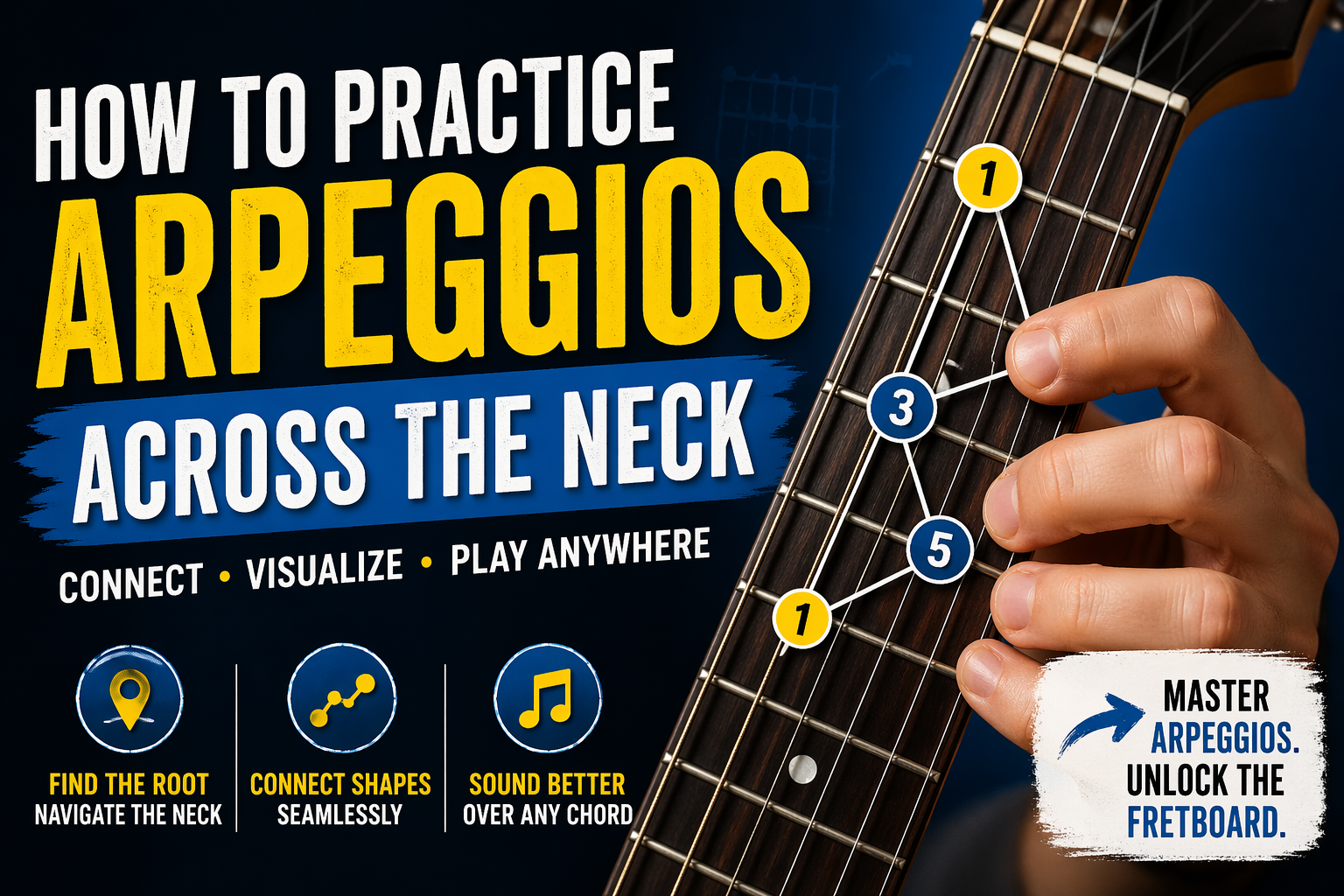
Learning guitar arpeggios is one thing. Actually using them across the neck is where most players get stuck.
A lot of guitarists learn one arpeggio shape… Practice it in one position… And then wonder why they still feel trapped when improvising or navigating the fretboard.
The truth?
Arpeggios become incredibly powerful when you stop seeing them as isolated patterns and start connecting them across the neck.
That’s exactly what this article will help you do.
If you’re brand new to arpeggios, start here first:
https://www.playlikeaproguitar.com/blog/WhatAreGuitarArpeggios
And if you're still learning overall fretboard navigation:
https://www.playlikeaproguitar.com/blog/UltimateGuidetoLearningGuitarFretboard
Why Most Guitar Players Struggle With Arpeggios
Most players make one of two mistakes:
They memorise shapes without understanding notes
or
They only practice one position
This creates the same issue many players experience with pentatonic scales: they feel stuck.
...What Are Guitar Arpeggios? (And Why They Unlock The Fretboard)
If you’ve heard guitar players talk about arpeggios and thought: "What exactly are arpeggios?" You’re not alone.
Many players hear terms like:
triads
arpeggios
intervals
chord tones
…and immediately feel overwhelmed.
The good news? Arpeggios are much simpler than they sound. And they can completely transform your fretboard understanding.
If you’re still learning basic fretboard navigation first, start here:
https://www.playlikeaproguitar.com/blog/UltimateGuidetoLearningGuitarFretboard
What Is An Arpeggio?
An arpeggio is simply a chord played one note at a time.
Example: A minor chord contains:
A, C, E
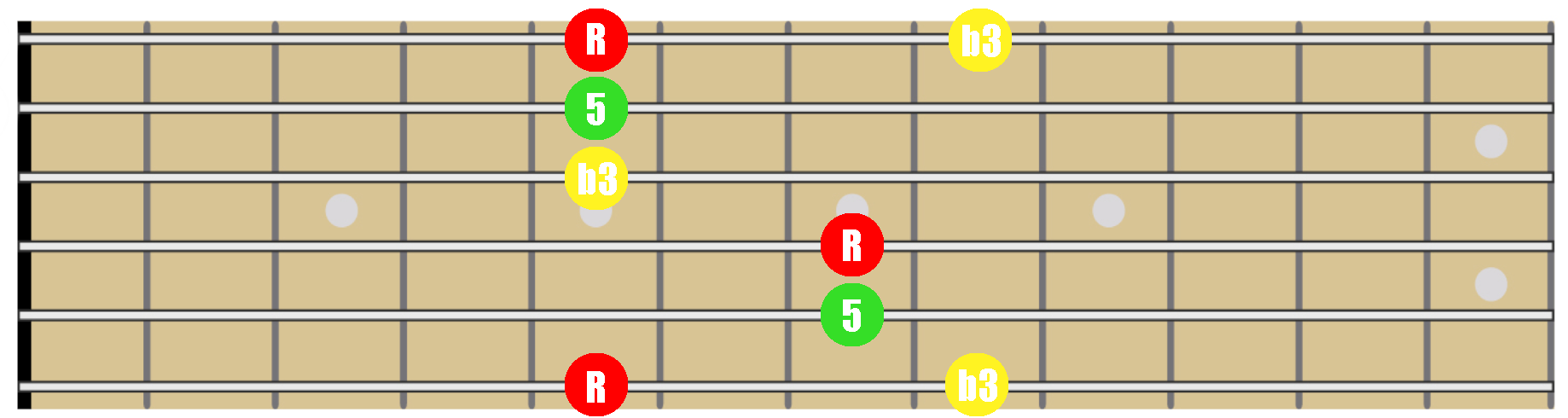
Playing those notes individually creates an arpeggio. That’s it.
Why Arpeggios Matter
Arpeggios help you:
- understand chords
- visualise the neck
- target strong notes
- connect scales
- improve soloing
This is why they’re so powerful.
Arpeggios vs Scale Shapes
Scales give you options. Arpeggios highlight strong chord tones.
They work best together.
Read:
https://www...
The Ultimate Guide To Learning The Guitar Fretboard
Learning the guitar fretboard can feel overwhelming. There are notes everywhere. Scale shapes everywhere. CAGED diagrams. Modes. Arpeggios.
And most players end up feeling more confused the longer they study.
The truth?
Learning the fretboard is much simpler than most players think. You just need the right roadmap.
This guide will show you exactly how to learn the guitar fretboard step-by-step.
And if you want a faster structured system, check out Fretboard Freedom here:
https://www.playlikeaproguitar.com/fretboardfreedom
Step 1: Learn The Musical Alphabet
Before touching the fretboard:
A B C D E F G
No sharps/flats between:
B/C
E/F
This helps everything make sense faster.
Step 2: Memorise Your Low E String
Learn:
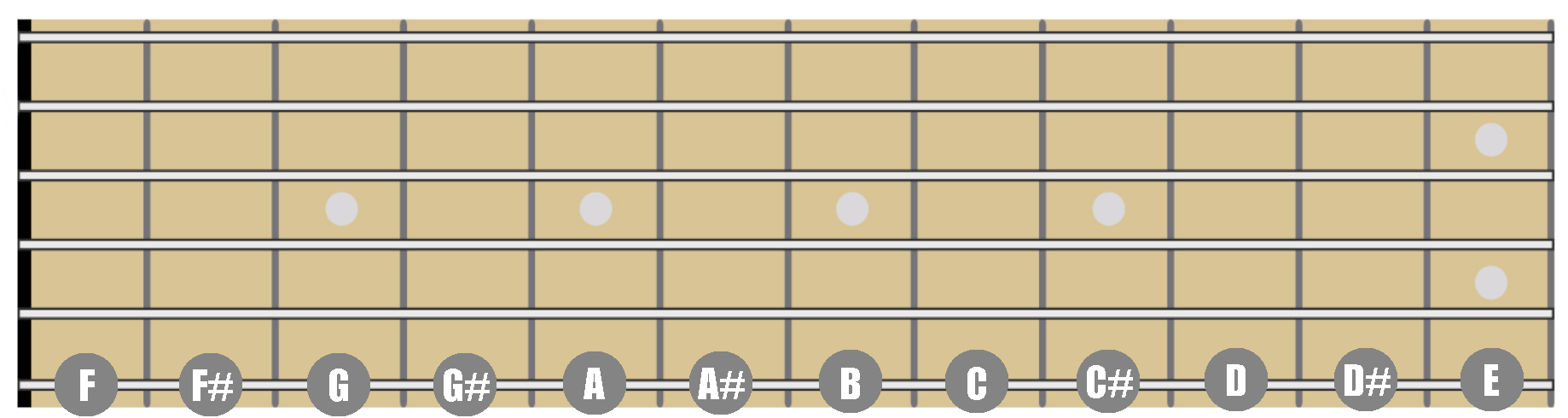
Then repeat this on your A string.
For a full breakdown:
https://www.playlikeaproguitar.com/blog/MemoriseNotesOnTheFretboard
Step 3: Learn Octave Shapes
This dramatically speeds up note recognition.
Find: A notes, C notes and G notes across multiple...
Why You Still Don’t Know The Guitar Fretboard (And How To Fix It)
You’ve learned scales, You’ve memorised shapes... You’ve watched countless YouTube videos.
And yet... You still feel completely lost on the guitar fretboard.
If that sounds familiar—you’re not alone! This is one of the biggest frustrations guitar players face.
And the good news?
It’s usually not because you’re bad at guitar. It’s because your learning approach is broken.
Let’s fix that.
If you’re brand new to fretboard learning, start with the complete roadmap here:
https://www.playlikeaproguitar.com/blog/UltimateGuidetoLearningGuitarFretboard
Problem 1: You Learned Shapes Before Notes
This is extremely common.
Many players learn:
- pentatonic boxes
- modal shapes
- CAGED diagrams
…but never learn actual note locations.
This creates dependency on patterns.
Read this next:
https://www.playlikeaproguitar.com/blog/MemoriseNotesOnTheFretboard
Problem 2: You Only Practice Vertically
Most guitar players only practice up and down inside one position.
This creates “box t...
Guitar Fretboard Exercises That Actually Work
Learning the guitar fretboard can feel overwhelming. You memorise scales… Learn shapes… Watch YouTube tutorials…
And somehow still feel lost when you try to move around the neck.
The problem?
Most guitar players practice the wrong things. They spend hours running scales mechanically instead of building actual fretboard awareness.
These exercises will help you learn the guitar neck faster and finally understand how everything connects.
If you're completely new to fretboard learning, start here first:
https://www.playlikeaproguitar.com/blog/UltimateGuidetoLearningGuitarFretboard
And if you haven't learned your notes yet:
https://www.playlikeaproguitar.com/blog/MemoriseNotesOnTheFretboard
Exercise 1: Random Note Drill
This is one of the fastest ways to memorise notes.
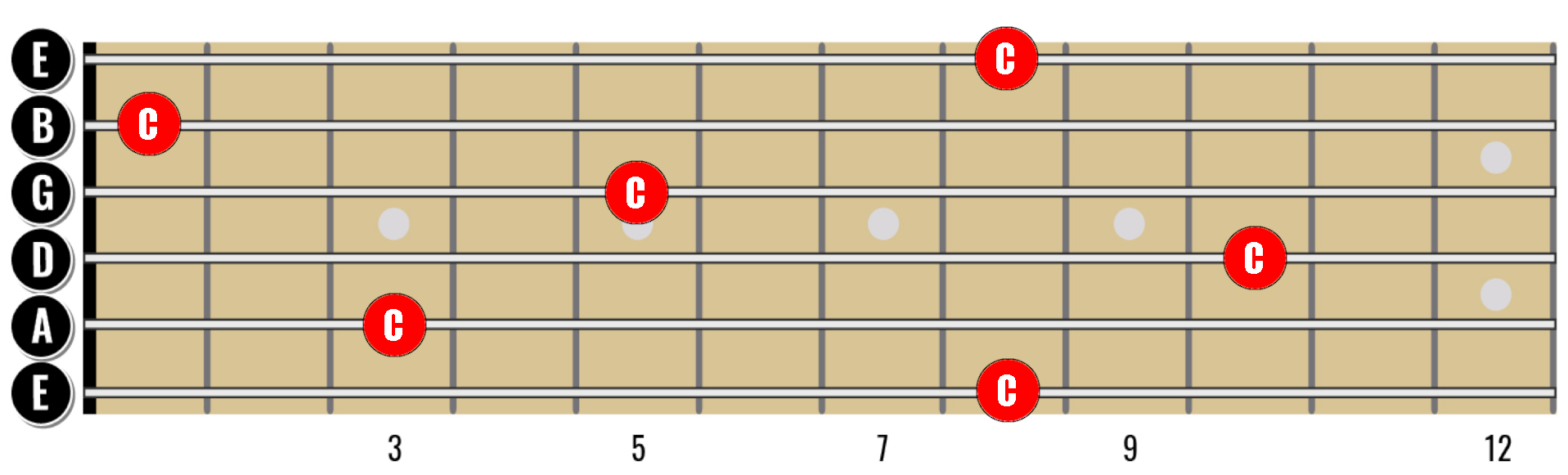
Ask yourself:
"What note is on the 8th fret of the low E string?"
"What note is on the 3rd fret of the G string?"
Answer quickly. Do this for 5 minutes daily. This dramatically improves note recall.
Exe...
How To Use The CAGED System Across The Neck
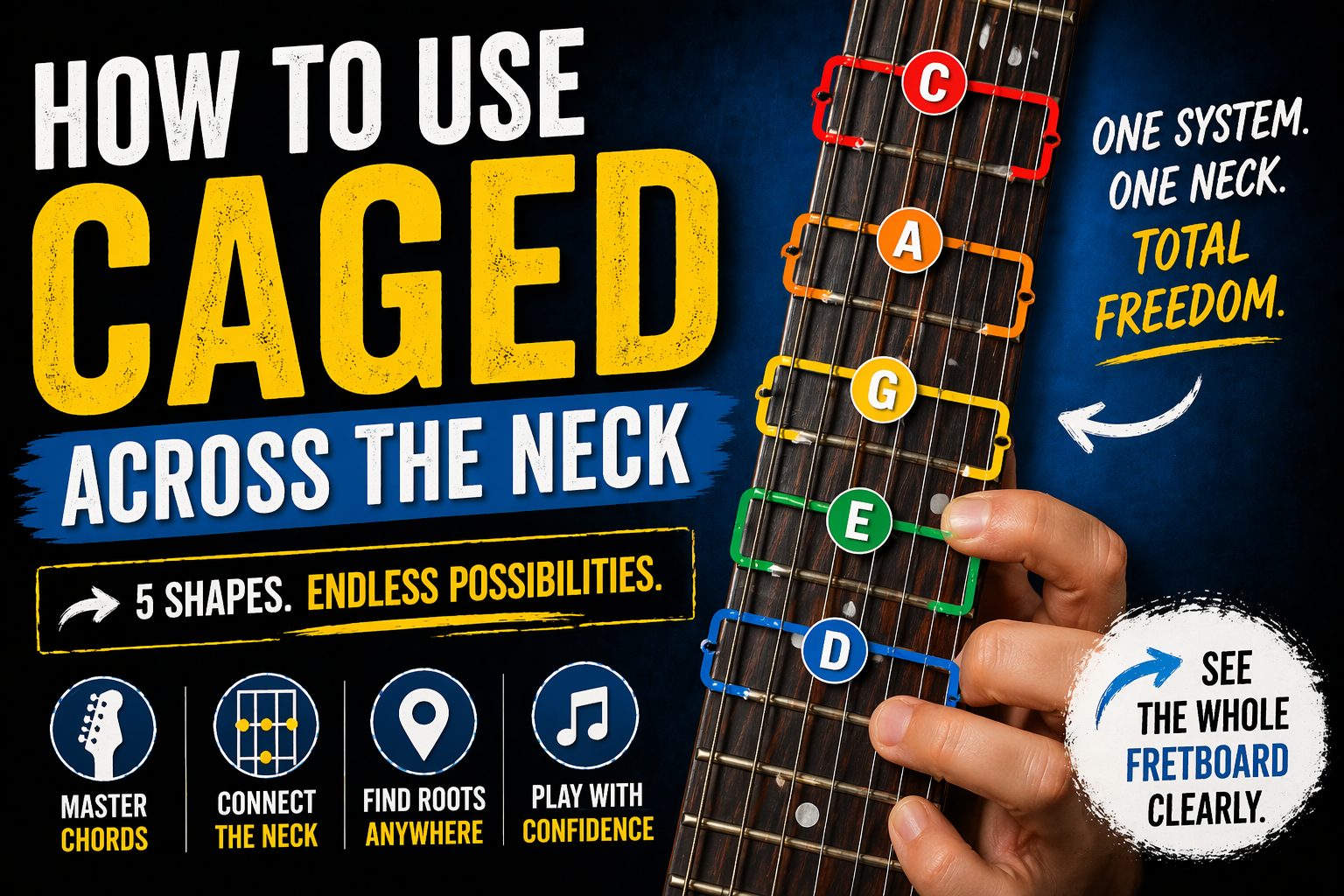
A lot of guitar players learn what the CAGED system is…but never actually learn how to use it.
They memorise five chord shapes, watch a few YouTube videos, then think: "Cool…but how does this actually help me play better?"
That’s where most CAGED lessons fail. The CAGED system becomes powerful when you use it to connect the entire fretboard—not just memorise shapes.
If you haven’t read the beginner breakdown yet, start here first:
https://www.playlikeaproguitar.com/blog/WhatIsCAGEDSystem
And if you're still learning overall fretboard navigation:
https://www.playlikeaproguitar.com/blog/UltimateGuidetoLearningGuitarFretboard
Step 1: Learn One Key First
Don’t try applying CAGED to every key immediately. Start simple with C major.
This is easier visually most players.
Map all five CAGED positions in one key before expanding.
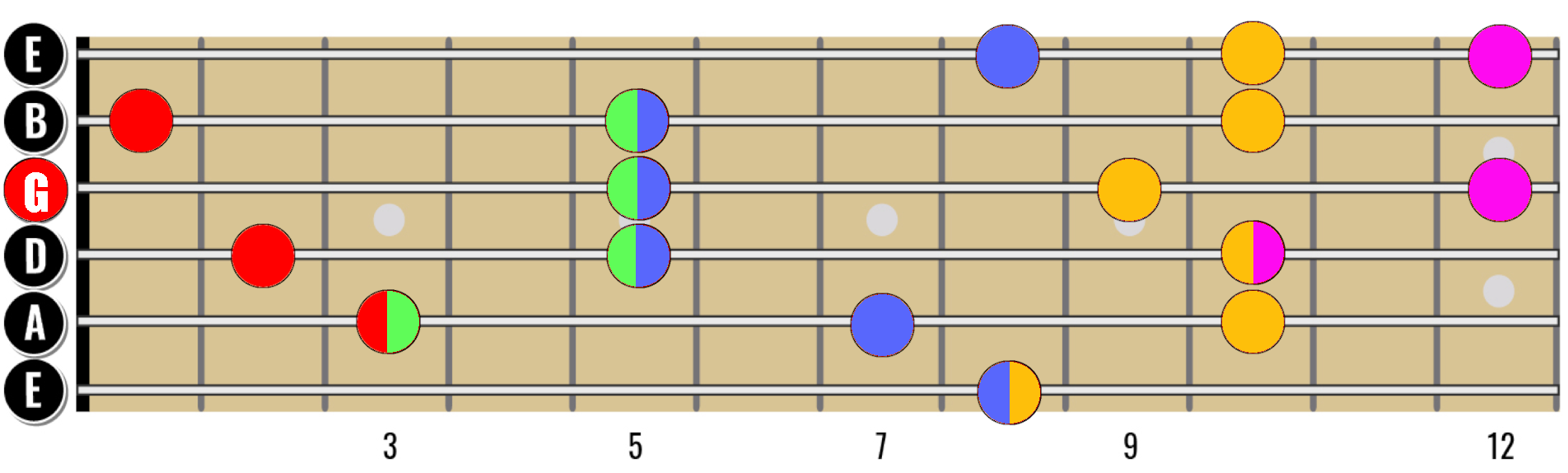
Step 2: Find Your Root Notes
This is where everything starts making sense. Every CAGED shape contains root notes.
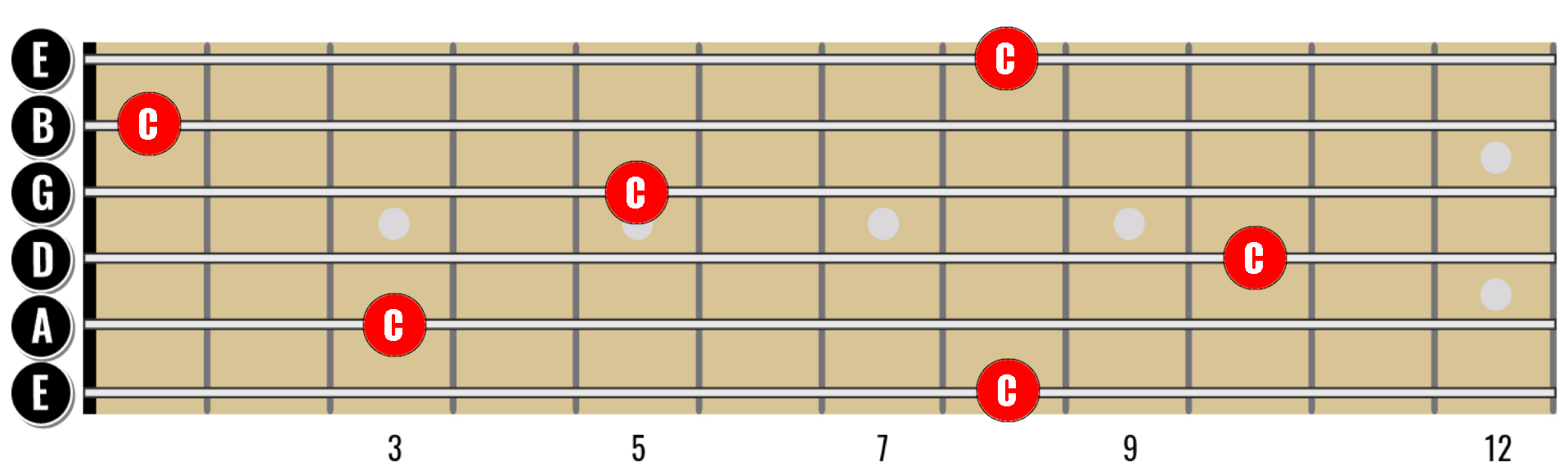
These roots tell you:
- where ...
What Is The CAGED System On Guitar? (And Why It Confuses So Many Players)
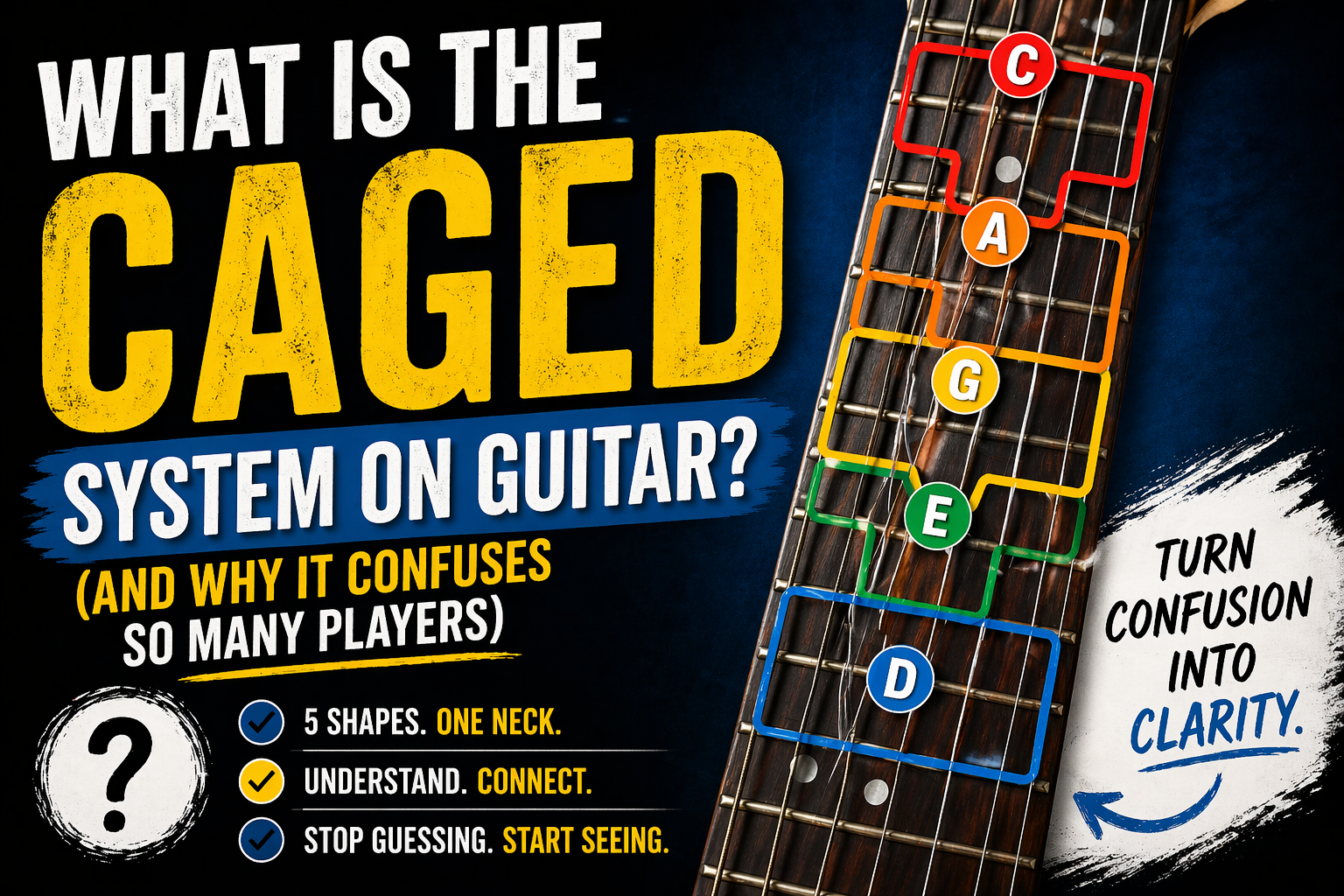
If you’ve ever searched: "What is the CAGED system on guitar?" You’ve probably found yourself more confused after watching tutorials. Most lessons throw endless diagrams at you. They show shapes. Patterns. Theory terms. And somehow make the fretboard feel even more overwhelming.
The truth?
The CAGED system is actually very simple. And when used correctly, it can completely transform your fretboard awareness.
If you're still working on overall neck understanding first, start here:
https://www.playlikeaproguitar.com/blog/UltimateGuidetoLearningGuitarFretboard
And if you're struggling with pentatonic connections, read:
https://www.playlikeaproguitar.com/blog/ConnectPentatonicScaleShapes
What Does CAGED Stand For?
CAGED refers to five open chord shapes:
C A G E D
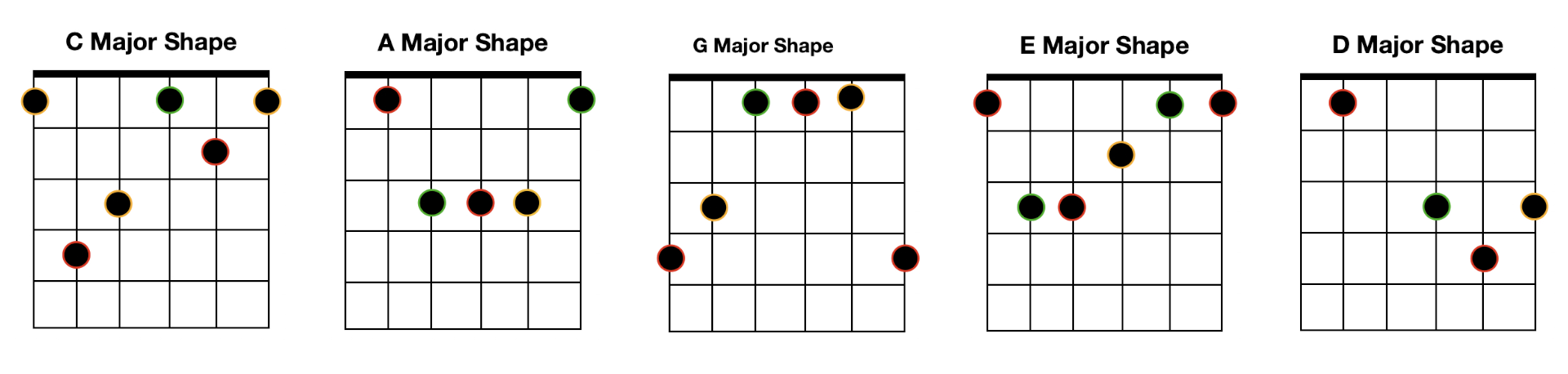
These shapes repeat across the entire neck. Every major chord can be played using these five forms.
Example:
A major can be played as:
C shape A major
A shape A major
G shape A major
E shape A major
D shape A major...
How to Connect Pentatonic Scale Shapes Across the Neck
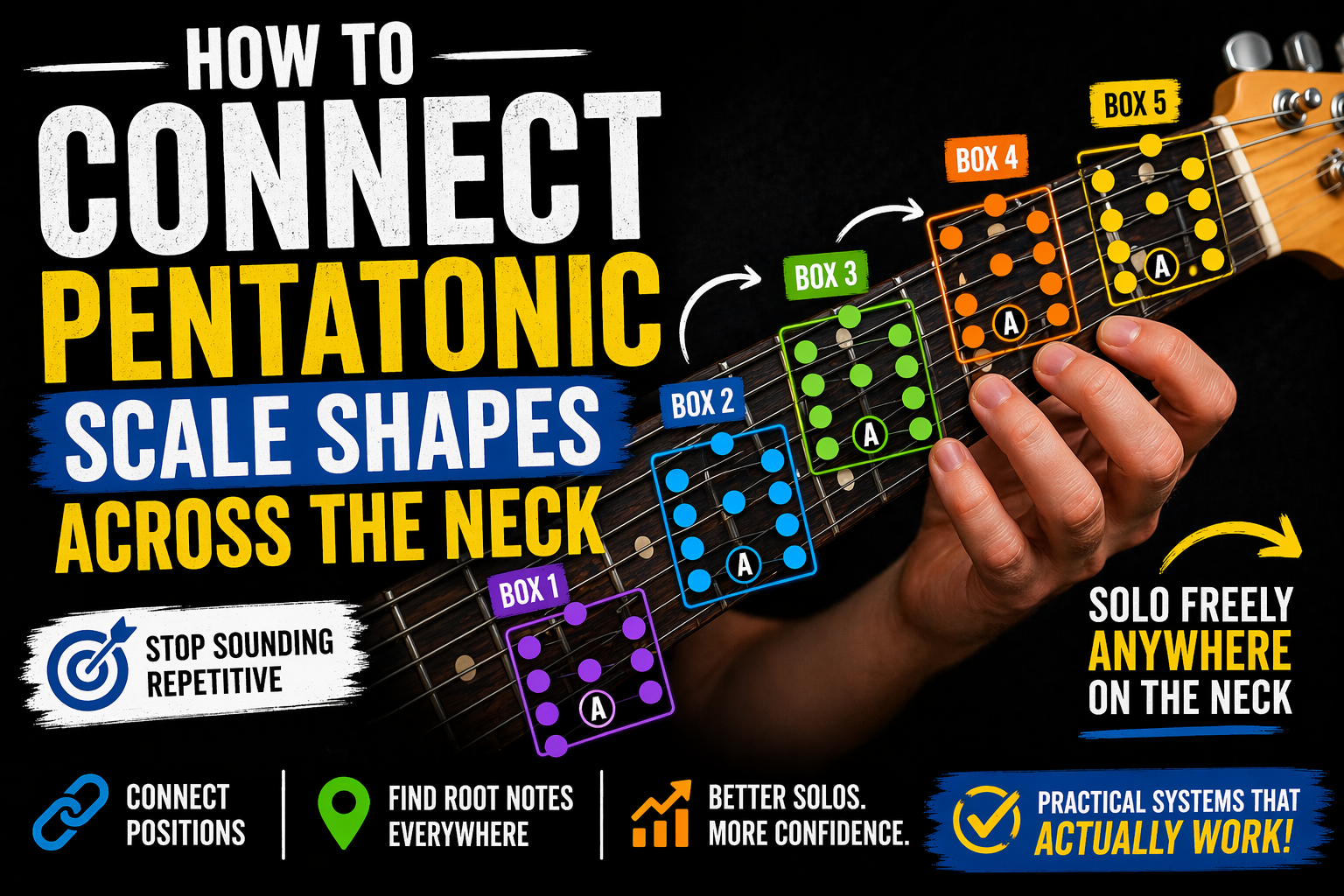
One of the biggest breakthroughs in guitar soloing happens when you stop seeing pentatonic scales as separate boxes.
Most guitar players learn:
Box 1
Box 2
Box 3
Box 4
Box 5
…but they never learn how these shapes actually connect. That’s why solos often feel robotic. You’re jumping between disconnected patterns instead of seeing one complete fretboard map.
The good news?
Connecting pentatonic scales is much easier than most players think. And once you understand this, your solos instantly sound more fluid.
If you're still learning overall fretboard navigation, start here first:
https://www.playlikeaproguitar.com/blog/UltimateGuidetoLearningGuitarFretboard
And if you’re currently trapped in one position, read this first:
https://www.playlikeaproguitar.com/blog/StuckInPentatonicBox1
Why Most Players Struggle To Connect Scale Shapes
The biggest issue? Players memorise shapes individually.
They learn: “Here’s Box 1” Then later: “Here’s Box 2” But nobody explains how these patt...

